Is Artificial Turf Safe for Kids and Pets in Bellevue? What the Materials, Drainage, and
Is Artificial Turf Safe for Kids and Pets in Bellevue? What the Materials, Drainage, and Base Actually Tell You
A parent looking at artificial turf for a backyard play area in Bellevue is rarely worried about mowing. The question that actually stalls the decision is sharper: what is inside this material, and will it hurt my kid or my dog if they’re rolling around in it every day. That’s a fair question, and it deserves a specific answer rather than a marketing line.
What “Non-Toxic and Lead-Free” Actually Covers
Waterloo Turf uses non-toxic, lead-free turf materials rated for 12 to 20 years of performance in hot climates. That range comes from testing under sustained heat and UV exposure, which is a heavier load than most Bellevue yards will see. The Pacific Northwest’s marine climate is milder than Phoenix or Dallas, so UV degradation typically happens slower here, but the same UV-stabilized backing still matters, especially on south-facing lawns or yards with strong afternoon sun. Lead-free composition addresses the toxicity concern directly; it doesn’t address every question a family might have about a specific product line, so if a manufacturer’s safety data sheet matters to your decision, ask for it before the yard is measured.
Why the Base Matters More Than the Turf Fabric
Most odor and drainage complaints trace back to what’s underneath the grass, not the grass itself. Waterloo Turf won’t install turf directly onto dirt. Every job involves excavating the area and compacting a base of crushed stone or decomposed granite designed to mimic how natural soil drains. This step is treated as non-negotiable, and it’s the reason a properly installed lawn shouldn’t wrinkle, pool water, or trap pet waste against an impermeable surface.
Pet odor specifically comes from urine sitting against a poorly draining base or getting caught in dense infill. A permeable stone base combined with the right infill gives liquid somewhere to go instead of sitting at the surface. This is also why rinsing still matters: turf marketed as maintenance-free with zero upkeep is overstating things. It’s accurate to call it low maintenance, not zero maintenance; a dog run area especially benefits from occasional rinsing and light brushing to keep it performing the way it’s designed to.
Fading and Heat Performance in a Bellevue Yard
The 12 to 20 year lifespan figure is tied to premium, UV-stabilized materials holding their color and structure under heat stress. In a Bellevue climate, that stress is lower on average than in drought-prone regions like Arizona or Texas, but it isn’t zero: glass and window reflections can create hot spots on a lawn that get overlooked during a standard walkthrough. Part of a proper assessment includes checking for low-e window reflections nearby, since concentrated light from certain windows can accelerate wear on the section of turf it hits directly. Skipping that check is a common reason turf fades unevenly in one specific patch rather than across the whole yard.
HOA Approval Before the Yard Is Torn Up
Many Bellevue neighborhoods have HOA covenants that specifically address synthetic turf: pile height, color, and visibility from the street are common points of review. Before ordering materials, it’s worth pulling the actual HOA architectural guidelines rather than assuming turf falls under general landscaping rules. A written product spec sheet covering color, pile height, and backing material is typically what an HOA committee wants to see, and having that ready before submission avoids a delay that has nothing to do with the installation itself.
Protecting What’s Already There
Existing irrigation lines, pool decking, and established landscaping are usually part of the same yard the turf is going into, and they don’t get ignored during installation. Irrigation lines running through the turf area are capped off, which removes the ongoing water cost of a sprinkler system running under grass that no longer needs it. Drainage is planned around existing hardscapes and pool decking before excavation starts, not adjusted afterward, since runoff patterns change once a permeable base and turf layer replace natural soil.
Where Playground and Pet Turf Differ From a Putting Green
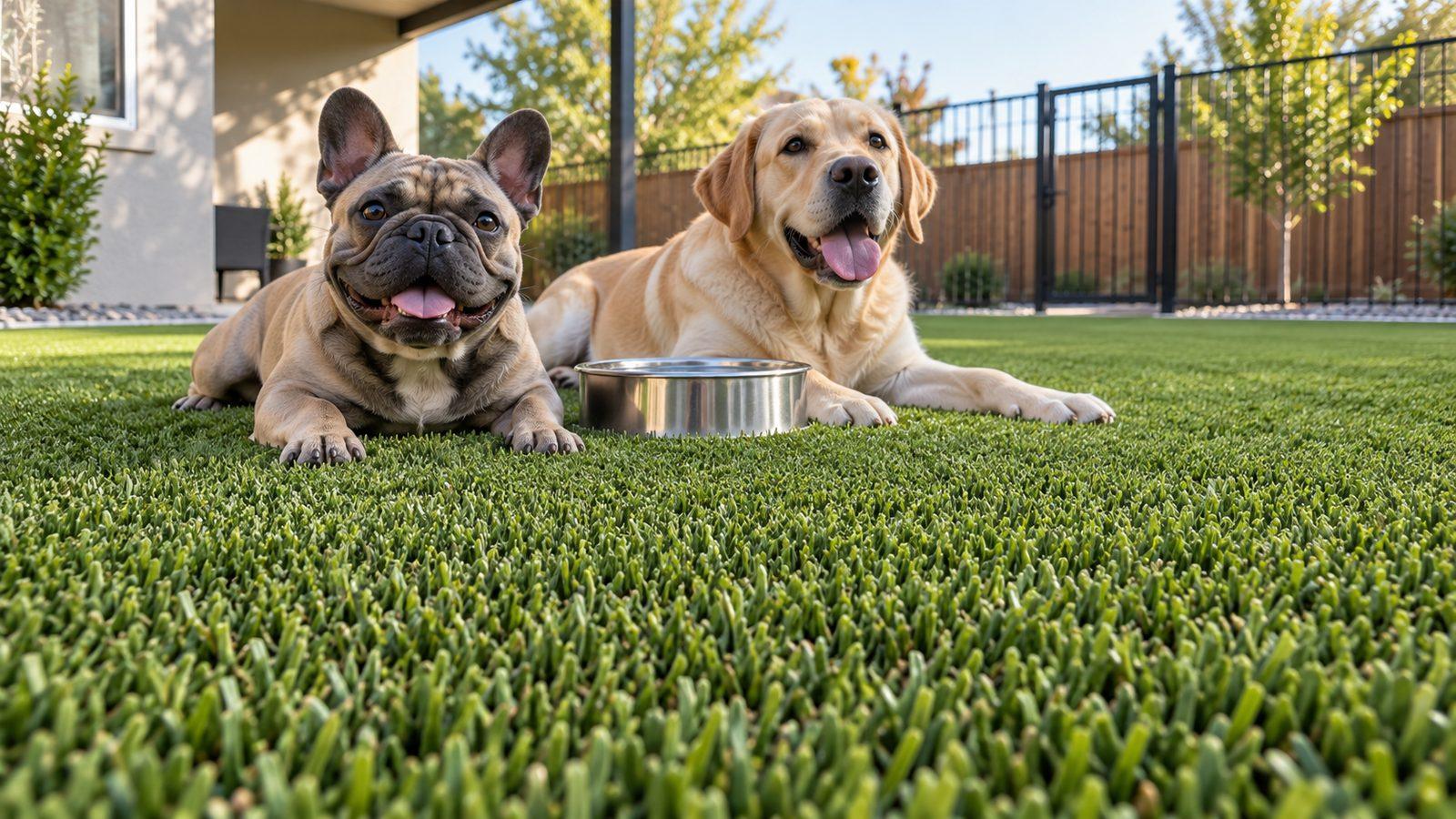
A yard serving both a dog and small kids has different priorities than a homeowner installing a backyard putting green. Pet turf leans on infill and drainage design to manage odor. Playground turf is evaluated more on cushioning and fall-attenuation under structures. Putting green turf is built around a level, compacted base and a different pile structure entirely for ball roll. The base preparation principle holds across all three, no turf goes down without proper excavation and compaction, but the surface-level choices (infill type, pile height, backing) should match what the space is actually used for.
A Straightforward Way to Verify Any of This
Ask to see the base preparation plan before turf is ordered, not after. A contractor willing to walk through the excavation depth, base material, and drainage layout in writing is giving you something concrete to evaluate, a lawn that looks identical from a photo can perform very differently depending on what’s six inches underground.
FAQs
Does the infill used in pet areas contain anything harmful?
Ask your installer for the specific infill product and its safety documentation for the section of yard your pets use most. Non-toxic, lead-free base materials address the primary toxicity concern, but infill choice is a separate decision worth confirming directly.
Why would turf still smell like pet urine if it’s marketed as low maintenance?
Odor is almost always a drainage and infill issue, not a fabric issue. A permeable crushed-stone or decomposed granite base gives liquid somewhere to go; without it, urine sits at the surface regardless of how the turf itself is rated.
Can I still get HOA approval if my Bellevue neighborhood restricts synthetic materials?
Many HOAs allow turf that meets specific pile height and color standards. Request the architectural guidelines directly and have a product spec sheet ready before submitting for review.
What happens to my sprinkler system once turf goes down?
Existing irrigation lines in the turf footprint are capped off during installation, which stops the ongoing water use for that section of the yard.
Next Step
If lead-safety, pet odor, or drainage around your pool deck or existing landscaping are the concerns holding up a decision, the most useful next step is an in-person yard assessment, one that includes a base and drainage plan you can review before any material is ordered. Waterloo Turf Bellevue Artificial Grass can walk through that plan for your specific yard, including HOA-ready specs if your neighborhood requires them.
Request a yard assessment that includes a written base and drainage plan before any turf is ordered: the details that actually address odor, drainage, and HOA questions live in that plan, not in the marketing copy.
Back