What Actually Drives Your Artificial Grass Installation Cost in Las Vegas
Why Two Las Vegas Yards Rarely Cost the Same
A homeowner in Summerlin gets one quote. A neighbor two streets over, with a yard that looks nearly identical, gets a number that’s noticeably different. Both are asking the same question: what should artificial grass installation cost in Las Vegas actually run? The honest answer is that a flat price-per-square-foot figure rarely tells the whole story, because the site conditions underneath and around the lawn do most of the work of setting the price. A conversation thread among desert-climate homeowners comparing turf costs made a similar point repeatedly: the same square footage produced very different totals once excavation depth, drainage needs, and obstacles were factored in. That pattern holds true in the Las Vegas Valley as well.
The Base Prep Line Item That Shouldn’t Be Skipped
At Waterloo Turf, base preparation is treated as non-negotiable. We don’t install turf directly onto existing dirt, because unprepared soil shifts, compacts unevenly, and leads to wrinkling and pooling water within a season or two, especially through Las Vegas’s heat cycles. Instead, our crews excavate the area and build a compacted base of crushed stone or decomposed granite that mimics natural drainage. That excavation and compaction work is often the single biggest variable in a quote. A yard with hard-packed caliche soil, tree roots, or old sprinkler trenching takes more time and material to prepare correctly than a flat, previously landscaped bed. If a quote skips this step or glosses over it, that’s worth asking about directly, because it affects how the lawn performs in year five, not just how it looks on install day.
Drainage, Pools, and Low-E Windows Change the Math
Las Vegas yards frequently back up to pool decking, retaining walls, or hardscape that redirects water in specific ways during our monsoon bursts. Before installation, we assess how water will move once the yard is no longer soil that absorbs runoff, and we plan drainage channels around existing pools and hardscape rather than assuming a generic slope will work. We also check for low-e window reflections from nearby homes, since concentrated reflected heat can affect turf fibers over time. None of this shows up if a contractor is only measuring square footage. It shows up in how the quote accounts for extra drainage routing, protective boundary work near pool coping, or fiber selection suited to higher heat exposure in that specific spot.
Irrigation Capping and What It Saves You Later
One detail that’s easy to overlook when comparing quotes: what happens to your existing sprinkler system. Our installation teams specifically cap off irrigation lines running through the turf area. This stops water from pooling under the base, prevents future leaks nobody notices until the lawn shows a soft spot, and eliminates the ongoing water cost of a system still cycling under a lawn that no longer needs it. If a quote doesn’t mention irrigation capping at all, ask how that system is being handled, because leaving it live is one of the more common causes of drainage complaints and pet odor issues after installation. Turf itself is low maintenance, not zero maintenance; it still needs occasional rinsing and light brushing, and a properly capped, well-drained base is what makes that occasional upkeep actually sufficient.
Access, Seams, and How the Yard Will Be Used
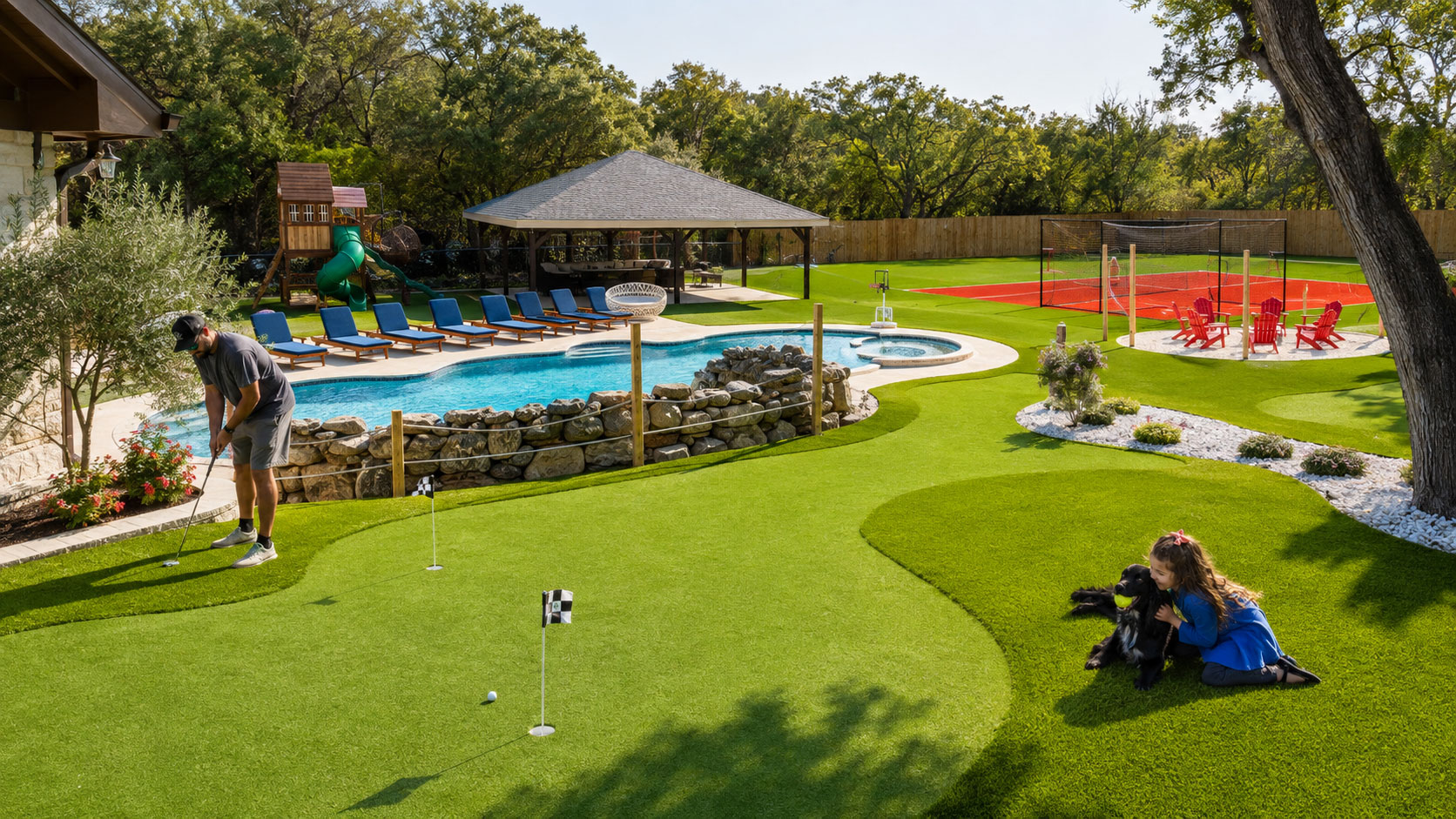
A side yard reachable only through a narrow gate takes longer to prep than a backyard with direct driveway access for equipment and material delivery. Seam placement also matters more than most people expect: a lawn that will see daily dog traffic or a putting green built for consistent roll needs seams positioned and secured differently than a decorative front-yard strip. Commercial or sports-use turf carries its own access and base requirements again, since the surface has to hold up to a different kind of repeated load. All of this factors into labor time, which is a real part of the total even before material cost enters the conversation.
HOA Paperwork Can Move Your Timeline
Many Las Vegas neighborhoods operate under HOA guidelines that specify approved turf colors, pile heights, or border materials. Getting that approval sorted before installation begins avoids a stalled project or a redo, both of which cost more than the paperwork delay itself. If your community has an HOA, mention it early in the quoting process so the proposed materials are ones likely to pass review the first time.
What to Have Ready Before You Ask for a Quote
A more accurate quote comes from more complete information going in. Before you request one, it helps to have:
- Approximate square footage of the area, or a willingness to have it measured on site
- What’s currently there: bare dirt, existing lawn, concrete, pavers, or a mix
- Photos of the space, including gates, slopes, and anything bordering it
- Your HOA’s turf specifications, if applicable
- Location of your existing irrigation lines and sprinkler heads, if known
- Distance from pools, spas, or pool decking
- How the space will be used: kids and pets, a putting green, entertaining, or commercial foot traffic
- Any known drainage issues you’ve noticed after rain
Bringing this to the first conversation cuts down on return visits and gets you a number that reflects your actual yard, not an average one.
FAQs
Why did one quote come in noticeably lower than another for the same square footage?
Lower quotes often skip or reduce base excavation, use a thinner crushed stone layer, or leave existing irrigation lines uncapped. Those shortcuts can lower the number today and cost more in drainage or wrinkling issues later.
Does HOA approval actually affect installation cost?
It affects timeline more directly than cost, but a rejected material choice can mean redoing part of the work, so it’s worth resolving before the crew arrives.
How does having a pool nearby change the quote?
Drainage has to be routed around pool coping and decking rather than assumed to run off naturally, which adds planning and sometimes material to that section of the yard.
Will my sprinkler system be reused or removed?
We cap off irrigation lines running through the new turf area rather than leaving them active underneath it, which is factored into the scope of the job.
Is artificial turf actually maintenance-free once it’s installed?
No. It’s low maintenance, not zero maintenance. Expect occasional rinsing and light brushing, particularly in pet areas, to keep it performing well.