
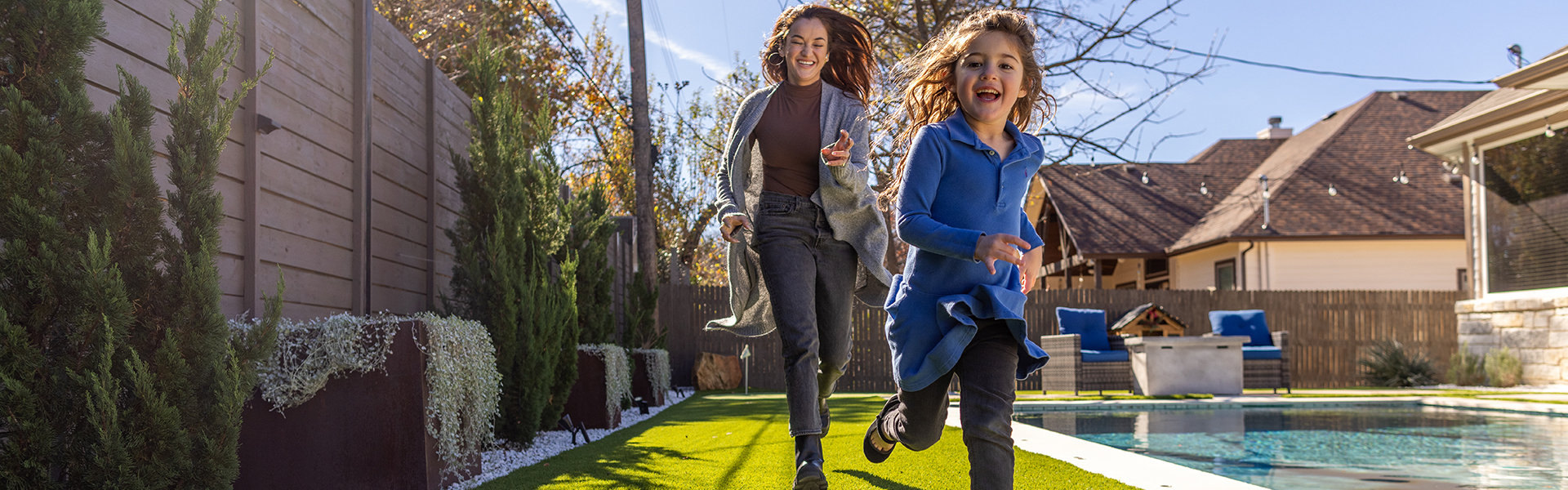
What a Properly Installed Artificial Lawn Looks Like in Raleigh Yards
Walk a handful of Raleigh neighborhoods right now and you’ll notice something: not all artificial turf looks the same two years in. Some lawns stay flat, tight, and green through a humid August and a wet March. Others ripple at the edges, show seam lines from the driveway, or pool water near the patio after a single storm. The difference almost never comes down to the grass itself. It comes down to what happened underneath it before a single blade was ever rolled out.
If you’re trying to judge a quote, a finished install, or your own yard after the crew leaves, here’s what the details should actually look like.
The Base Decides Everything Before Installation Day
Turf that ripples, sinks, or drains poorly almost always traces back to the base. A proper install never goes down directly on top of existing soil or grass. The dirt gets excavated, and a compacted base of crushed stone or decomposed granite goes in first, typically several inches deep, graded to mimic how water would move across natural soil. This is the step Waterloo Turf treats as non-negotiable under what the team calls the Waterloo Turf Way. Skipping it, or shortcutting the compaction, is the single most common reason a lawn looks impressive on install day and disappointing a year later.
When you’re standing on a finished lawn, press your heel into it. It should feel firm and even, not spongy or uneven underfoot. Low spots or soft give in certain areas usually mean the base wasn’t compacted uniformly before the turf went down.
Seams and Cuts: The Line Should Disappear, Not Announce Itself
Every yard has seams somewhere: turf rolls are only so wide. The test isn’t whether seams exist; it’s whether you can find them without looking closely. Blade direction should run the same way across both pieces, the seam tape or adhesive should sit flat with no lifting at the edges, and the grass fibers should be brushed so they blend into each other rather than part like a hairline.
Cuts around irregular shapes (flower beds, tree rings, drainage grates) are where sloppy work shows up fastest. Gaps, exposed backing, or jagged edges along a curve usually mean the installer rushed the cut rather than fitting it patiently to the actual contour of the space.
Edges and Transitions Where Turf Meets Hardscape, Pool Decking, or Beds
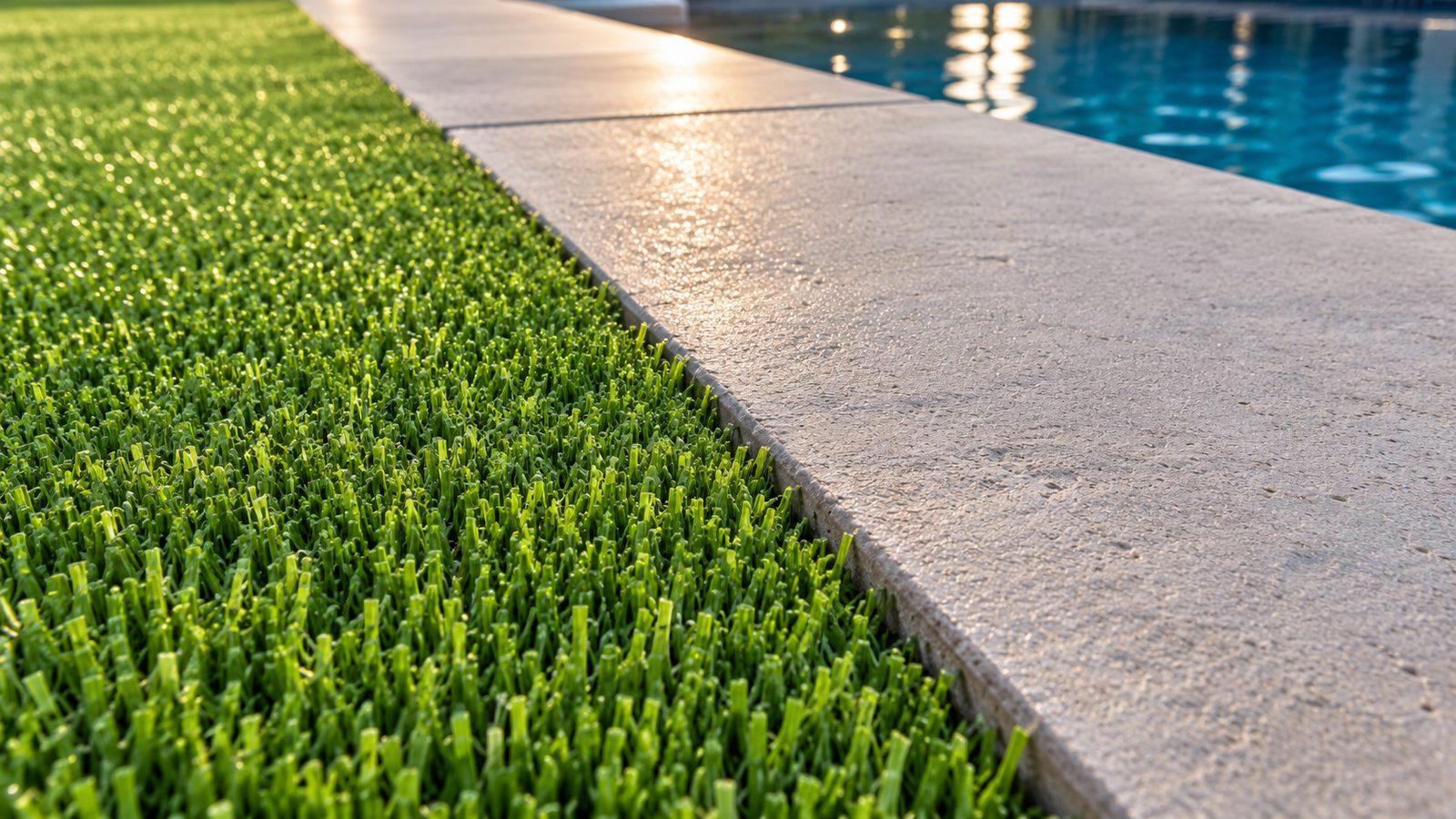
Raleigh yards rarely have one flat surface. Turf typically has to meet a patio, a pool deck, a walkway, or existing landscaping, and each of those transitions is a place where problems tend to concentrate. The turf edge should sit secured and flush against the hard surface, not curling up, not gapping, and not overlapping in a way that traps debris or moisture underneath.
Before installation even starts, a careful crew should be assessing how the yard’s hardscaping and pool decking affect drainage planning, and in some cases checking for low-e window reflections nearby, since concentrated heat and glare can affect how a synthetic surface performs in direct sun. If nobody asked about your pool equipment, your patio layout, or your irrigation system before the base excavation began, that’s worth asking about before you approve the work.
Speaking of irrigation: existing sprinkler lines running through the turf area should be capped off, not left active underneath the surface. An installer who leaves old irrigation lines untouched is leaving you with ongoing water costs for a system that’s no longer doing anything useful.
How the Surface Should Handle a Raleigh Downpour
Drainage is one of the most common concerns homeowners raise, especially with pets in the yard: nobody wants standing water or lingering odor after rain. A properly built base is designed to let water pass through at a rate comparable to natural soil, not sit on the surface. After a heavy Raleigh storm, water should be moving through the turf and base, not pooling on top of it or running off toward a foundation or fence line it wasn’t graded for.
If you notice puddling that takes hours to disappear, or a persistent odor near pet-use areas, that typically points back to inadequate base depth, poor compaction, or a drainage layer that wasn’t graded correctly around existing hardscape, not a flaw in the turf material itself.
Final Grooming and Infill: What It Should Feel Like Underfoot
The last stage of a proper install is grooming: brushing the fibers upright, distributing infill evenly, and making sure the blades don’t lay flat or matted in high-traffic areas right out of the gate. Infill should be spread consistently, not clumped near seams or thin in the middle of the lawn.
It’s worth being direct here: even a well-installed lawn is low maintenance, not maintenance-free. Expect to rinse it occasionally and brush high-traffic or pet areas from time to time to keep the fibers standing and odors from building up. Materials that are non-toxic, lead-free, and UV-stabilized are built to hold color and resilience for 12 to 20 years in hot climates, but that lifespan still depends on basic upkeep, not none at all.
Signs an Installer Skipped a Step
A few patterns show up repeatedly in yards where the install didn’t go well: visible wrinkling within the first year, seams that separate at the edges, turf laid directly over old sod without excavation, and drainage issues that appear only after the first real storm. If an HOA has already approved your neighborhood’s turf standards, ask whether the installer is familiar with those specifications: base depth and edge finishing are usually where HOA reviewers focus first.
FAQs
Why would a new turf install already look wrinkled after a few months?
It usually means the base wasn’t compacted enough, or the turf was stretched and secured before the ground beneath it had time to settle correctly.
Does turf installed near a pool need anything different?
Yes. Drainage planning near pool decking has to account for splash-out and runoff patterns, and the base grading needs to move that water away from the decking rather than trapping it under the turf.
What happens to my existing sprinkler system under the turf?
Lines running through the turf footprint should be capped off during installation so they’re not still using water underground for a lawn that no longer needs it.
Will my HOA care about what’s under the turf, not just how it looks?
Many HOA reviews do ask about base preparation and edge finishing, since that’s what prevents the shifting or wrinkling that draws complaints later.
Next Step
If you’re evaluating a quote or trying to figure out why an existing lawn isn’t performing the way it should, the fastest way to get a straight answer is an on-site look at the base, drainage plan, and edge work, not a phone estimate. Waterloo Turf Raleigh can walk your yard, explain what the base and drainage plan would look like for your specific layout, and point out anything an existing install may be missing.
Request an on-site evaluation of your yard’s base, drainage, and edge plan from Waterloo Turf Raleigh before approving or troubleshooting an install.
Back