What Actually Goes Into an Artificial Grass Installation in St. Petersburg
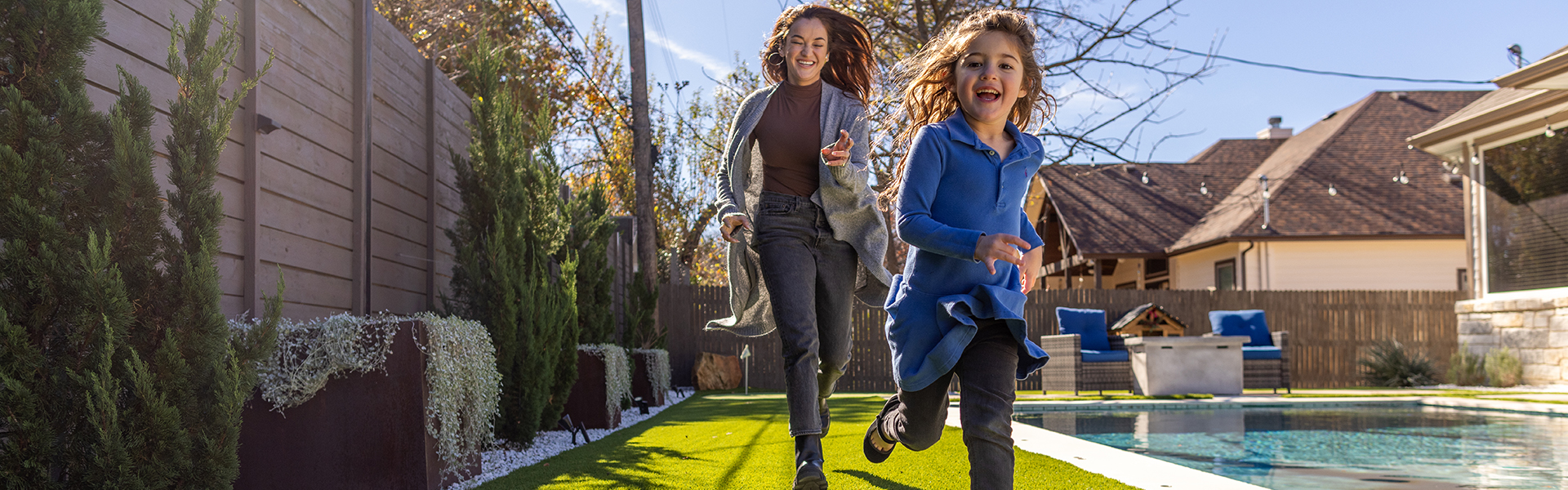
A small, sun-scorched backyard patch is often where St. Petersburg homeowners start this conversation — a defined space near a fence line or a side yard where real grass has already given up. The square footage is rarely the hard part. What determines whether that turf still looks right in year eight is what happens before a single blade goes down.
Why St. Petersburg’s Climate Changes the Installation, Not Just the Product
Florida sun and Florida rain are two different problems, and both show up in a yard within the first season. UV exposure fades cheap turf fibers within a couple of summers, which is why Waterloo Turf uses UV-stabilized materials built to hold color and resilience for 12 to 20 years in hot climates. Heat also affects surface temperature and drainage speed after a downpour, both of which get addressed at the base level, not the product level.
The Base Is the Installation
The part of the job nobody sees is the part that decides everything else. Waterloo Turf does not install turf directly onto existing dirt or sod — that approach leads to wrinkling, poor drainage, and a lawn that shifts underfoot within a year or two. Instead, the crew excavates the area and compacts a base of crushed stone or decomposed granite engineered to mimic how natural soil drains. This base is what keeps a St. Petersburg lawn flat through afternoon thunderstorms instead of pooling water or buckling in the heat.
What Happens to Your Existing Irrigation Lines
Most St. Petersburg homes converting a lawn to turf still have working sprinkler heads and irrigation lines running underneath. Leaving those active under artificial turf wastes water and can undermine the base over time. Waterloo Turf caps off irrigation lines within the turf footprint during installation, which removes that section from your watering costs going forward rather than leaving a system running into a lawn that no longer needs it.
Drainage Around Pools, Pavers, and Existing Landscaping
A lot of St. Petersburg properties have a pool deck, paver walkway, or established landscaping bordering the area getting converted. Before installation, the team assesses how water moves across the yard — where it currently drains, how nearby hardscape redirects runoff, and in some cases how low-e window reflections off nearby glass affect turf temperature in specific spots. Planning drainage around those existing features up front prevents water from backing up against a pool deck or landscaping bed after the turf goes in.
Pet Areas, Putting Greens, and Specialty Turf
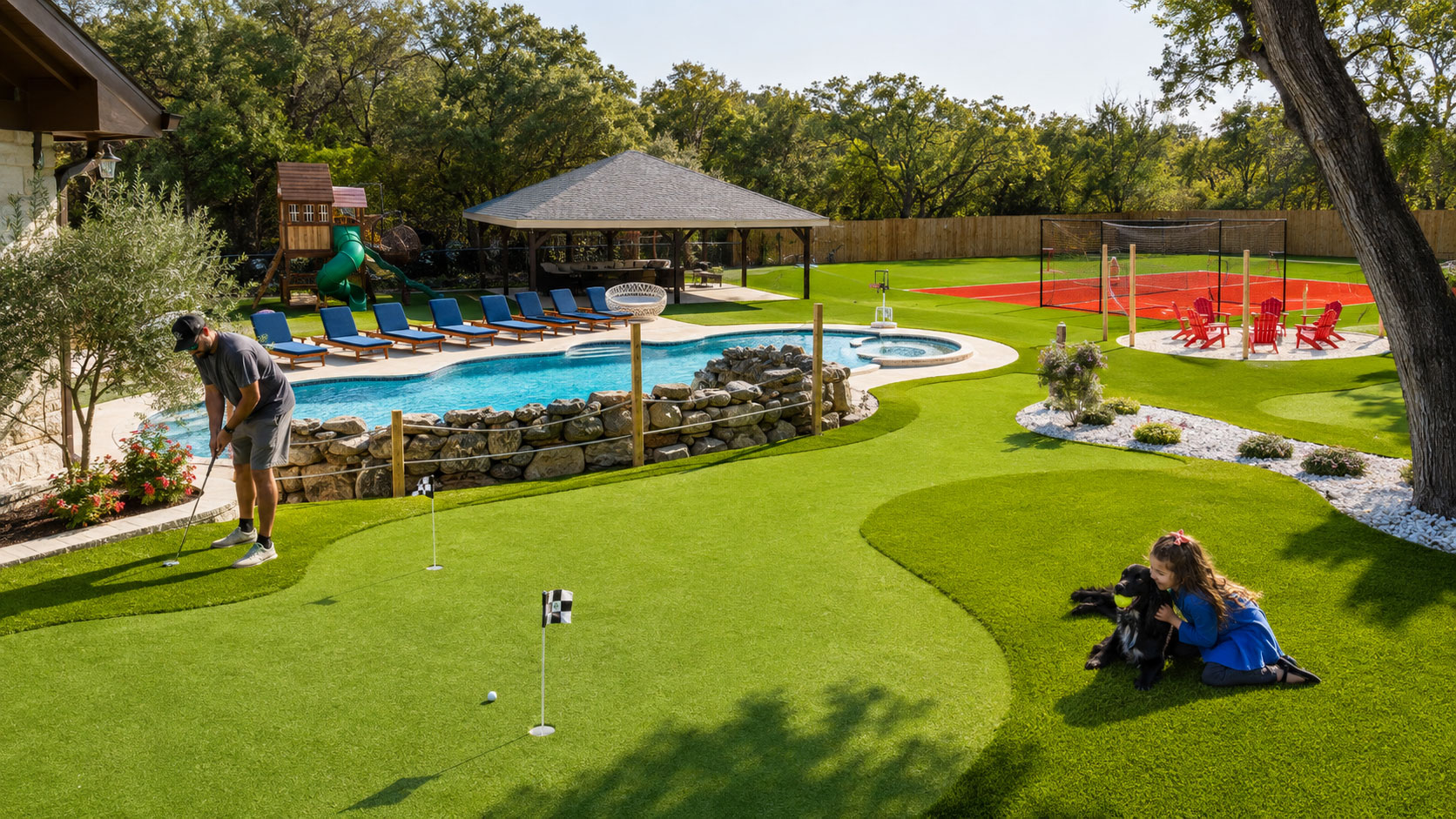
Not every St. Petersburg yard is a straightforward lawn replacement. Waterloo Turf installs pet turf systems designed around drainage and odor control, custom putting greens for homeowners who want a practice surface at home, and playground-rated turf for family play areas. Commercial and sports turf installations follow the same base-and-drainage standards, scaled for higher traffic. The right product depends on how the space gets used, not just its square footage.
Pet Odors and Drainage After Rain
This is one of the most common concerns raised before installation, and it’s a fair one in a climate with heavy seasonal rain. Odor control in a pet-turf system comes down to what’s built underneath it — a drainage layer that lets liquid pass through quickly rather than sitting on the surface. A yard with poor base drainage will hold odor regardless of the turf product used on top of it, which is another reason the base preparation isn’t something Waterloo Turf treats as optional or downgradable to cut cost.
HOA Approval in St. Petersburg Neighborhoods
Many St. Petersburg communities have HOA guidelines that address turf color, pile height, or visible seams. Homeowners in HOA-governed neighborhoods should check their community’s specific landscaping rules before finalizing a product choice, since requirements vary by community and change over time. A reputable installer can walk through product options that tend to meet common HOA standards, but the homeowner is ultimately responsible for confirming approval with their own HOA board.
What "Low Maintenance" Actually Means
Artificial turf is not a zero-maintenance surface, and it’s worth being direct about that. A properly installed lawn still needs occasional rinsing to clear debris and light brushing to keep fibers standing upright, especially in high-traffic or pet areas. What changes is the elimination of mowing, weekly watering, and fertilizing — not all upkeep entirely. Homeowners who go in expecting some light seasonal care get the most realistic picture of what ownership looks like.
Materials, Safety, and Long-Term Performance
For households with kids or pets, the material question usually comes down to safety first. Waterloo Turf uses non-toxic, lead-free turf materials rated for 12 to 20 years of performance in hot climates, backed by the Greener Cleaner Guarantee and premium UV-stabilized construction. That combination is what allows a lawn to hold its color and structure through repeated Florida summers rather than degrading after a season or two of direct sun.
FAQs
Does artificial turf need HOA approval in St. Petersburg? Many communities have landscaping guidelines that apply to turf color, pile height, or seam visibility, so it’s worth checking with your specific HOA board before finalizing a product. Requirements differ from one community to the next.
Will pet turf actually control odor after St. Petersburg’s heavy rains? Odor control depends primarily on the drainage base underneath the turf, not the turf material alone. A compacted, well-drained base clears liquid quickly instead of letting it pool and sit, which is why base preparation gets treated as non-negotiable rather than an upsell.
What happens to my sprinkler system once turf goes in? Existing irrigation lines within the turf footprint get capped off during installation, removing that section of the yard from your ongoing watering costs rather than leaving a system running underneath turf that no longer needs it.
How long does artificial grass hold up in Florida heat? UV-stabilized, non-toxic, lead-free materials are built to perform for roughly 12 to 20 years in hot climates, though actual lifespan depends on traffic, care, and site-specific conditions like drainage and sun exposure.
Back