

Artificial Turf Installation in Austin: Why Base Prep and Local Conditions Change the Job
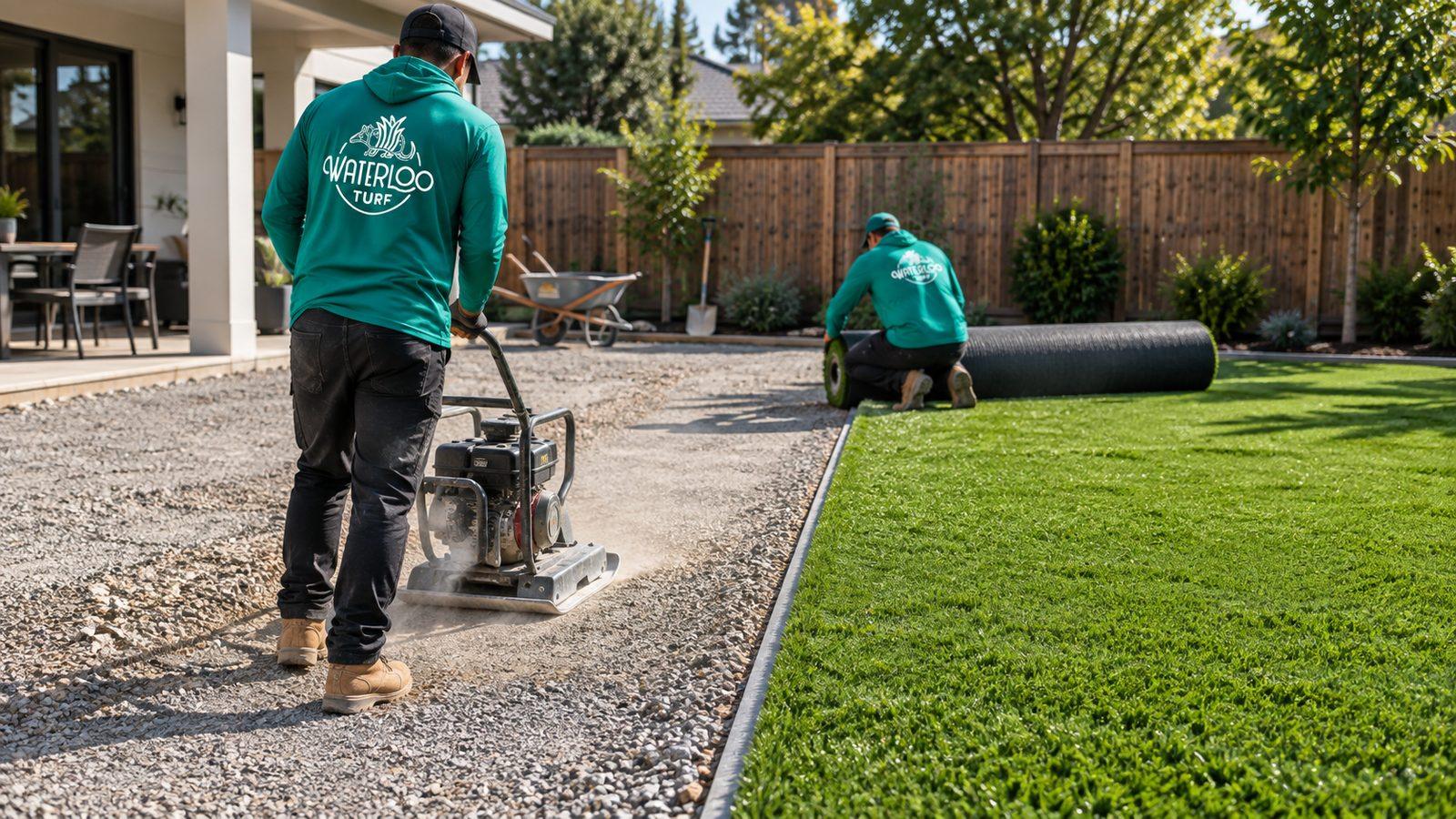
A homeowner in South Austin recently compared two turf quotes. One priced in full excavation and a compacted base. The other was several hundred dollars cheaper because it skipped that step and laid turf straight over the existing dirt. On paper, the cheaper bid looked like a better deal. In practice, that gap is the difference between a lawn that drains and holds its shape for years and one that wrinkles, pools water, and needs to be redone.
That comparison is the real decision point for most Austin turf projects, not the blade color or the brand printed on the roll.
Why Austin’s Clay Soil Makes Base Prep the Real Decision
Austin sits on expansive clay soil that swells when it’s wet and shrinks when it dries out. Turf installed directly on that soil moves with it, which shows up as wrinkling, low spots, and standing water after the next rain. Waterloo Turf does not install directly onto dirt. The base gets excavated and rebuilt with compacted crushed stone or decomposed granite, engineered to mimic natural drainage instead of fighting it. This step adds time and cost up front, but it’s the part of the job that determines whether the lawn still looks flat and drains properly five years from now, not just on installation day.
Irrigation Lines: What Gets Capped and Why It Matters for Your Water Bill
Most Austin yards getting turf still have an active irrigation system running to that section of the lawn. Left connected, those lines keep cycling water into ground that no longer needs it, which wastes water and can create moisture problems under the turf. As part of the install, the irrigation lines feeding the turf area get capped off so the system stops watering ground that no longer needs it. That’s a permanent fix, not a settings adjustment, and it’s worth confirming with any contractor whether this step is included or treated as an add-on.
HOA Approval in Austin Neighborhoods: What Committees Actually Ask For
A lot of Austin subdivisions have HOA design guidelines that predate synthetic turf becoming common, so approval isn’t automatic. Committees typically want to know the product looks like natural grass at a normal viewing distance, drains correctly instead of shedding water onto neighboring lots, and won’t create a maintenance eyesore over time. Homeowners going through HOA review should ask for product specs and drainage details in writing before submitting, since vague descriptions are a common reason approvals stall or get sent back for more information.
Performance in Triple-Digit Heat and Low-E Window Reflection
Austin summers regularly push past 100 degrees, and turf fiber quality determines whether that heat causes fading and brittleness or not. UV-stabilized, non-toxic and lead-free materials are built for that kind of sun exposure and are rated to hold up for 12 to 20 years in hot climates. One less obvious Austin-specific issue is low-e window reflection: certain energy-efficient windows can focus reflected sunlight onto a concentrated spot in the yard, which generates enough heat to damage synthetic fibers. Assessing a yard for this before installation, and planning the layout around pool decking and hardscape edges at the same time, avoids a problem that’s difficult to fix after the turf is already down.
Pets, Rain, and Drainage: What Actually Happens After a Storm
Pet odor complaints almost always trace back to drainage, not the turf fiber itself. If the base underneath doesn’t let liquid pass through and away, waste sits at the surface and odor builds. A properly compacted, permeable base is what allows rinsing to actually work instead of just spreading the problem around. During Austin’s heavier rain events, that same base is what keeps the yard from pooling water against the house, a fence line, or a pool deck, which is why drainage planning happens before installation rather than getting addressed afterward.
What ‘Low Maintenance’ Means Once Installation Is Complete
Synthetic turf is low maintenance, not zero maintenance. It still needs occasional rinsing, especially in pet areas, and light brushing to keep the fibers standing upright under regular foot traffic. What it removes is the weekly mowing, edging, and watering cycle, which is where most homeowners actually reclaim their time. Anyone comparing turf to a sprinkler-dependent lawn should weigh that ongoing light maintenance against the water savings and time back, rather than expecting a surface that needs no attention at all.
FAQs
Does Waterloo Turf install directly over existing grass or dirt in Austin yards?
No. Existing grass and soil get excavated first, and the area is rebuilt with a compacted crushed stone or decomposed granite base before turf goes down. Installing straight onto dirt is not part of how the job is done.
How long does artificial turf typically hold up in Austin’s summer heat?
With UV-stabilized, non-toxic materials, turf is built to perform in hot climates for a range of roughly 12 to 20 years, depending on traffic and exposure.
Can artificial turf near a pool or low-e windows be affected by heat or glare?
Yes, in certain layouts. Reflected sunlight from low-e windows can concentrate heat on a specific area of turf, so yards are assessed for that risk and for pool decking placement before installation is planned.
If you’re weighing a quote that skips excavation against one that includes it, that line item is worth asking about directly before signing anything.
If you’re comparing Austin turf quotes and want to know exactly what base prep, irrigation capping, and drainage planning your specific yard needs, request an on-site assessment from Waterloo Turf Austin before choosing a bid.
Back