What Actually Determines Artificial Grass Cost and Performance in Biloxi, MS
A Biloxi backyard that stays soggy for two days after a summer thunderstorm, then bakes under 95-degree heat for the rest of August, is not a typical lawn problem. It is a Gulf Coast problem, and it changes what an artificial grass installation needs to actually hold up here compared with a drier, inland climate.
Why a Standard Turf Job Struggles on the Mississippi Gulf Coast
Most of the artificial turf horror stories — wrinkling, standing water, a lawn that smells worse after rain instead of better — trace back to one decision made before a single blade of grass is ever laid down: what’s underneath it. Biloxi’s combination of heavy rainfall, high humidity, and salt-laden coastal air puts more stress on a synthetic lawn than a yard in a dry climate ever would. Installations that skip proper groundwork tend to show that stress within a season or two, not decades later.
The Base Is What Decides Whether Drainage Works
Waterloo Turf does not install turf directly onto existing dirt or grass, and that’s a deliberate standard, not a sales point. Soil compacts unevenly, holds water, and shifts with Biloxi’s wet-dry cycles, which eventually shows up as wrinkles, low spots, or turf that never quite drains the way it should. Instead, the area is excavated and rebuilt with a compacted crushed stone or decomposed granite base designed to mimic how water moves through natural, well-drained soil. This base layer is the part homeowners see the least and notice the most once it’s wrong — a lawn that puddles for a day after a storm usually has a base problem, not a turf problem.
Your Sprinkler System, Pool Deck, and Windows Matter Before Installation Day
Most Biloxi homes converting to synthetic grass already have an in-ground irrigation system running through the area. Leaving those lines active under turf just means paying to water something that no longer needs it, so the irrigation lines running through the turf footprint are capped off during installation rather than left buried and forgotten.
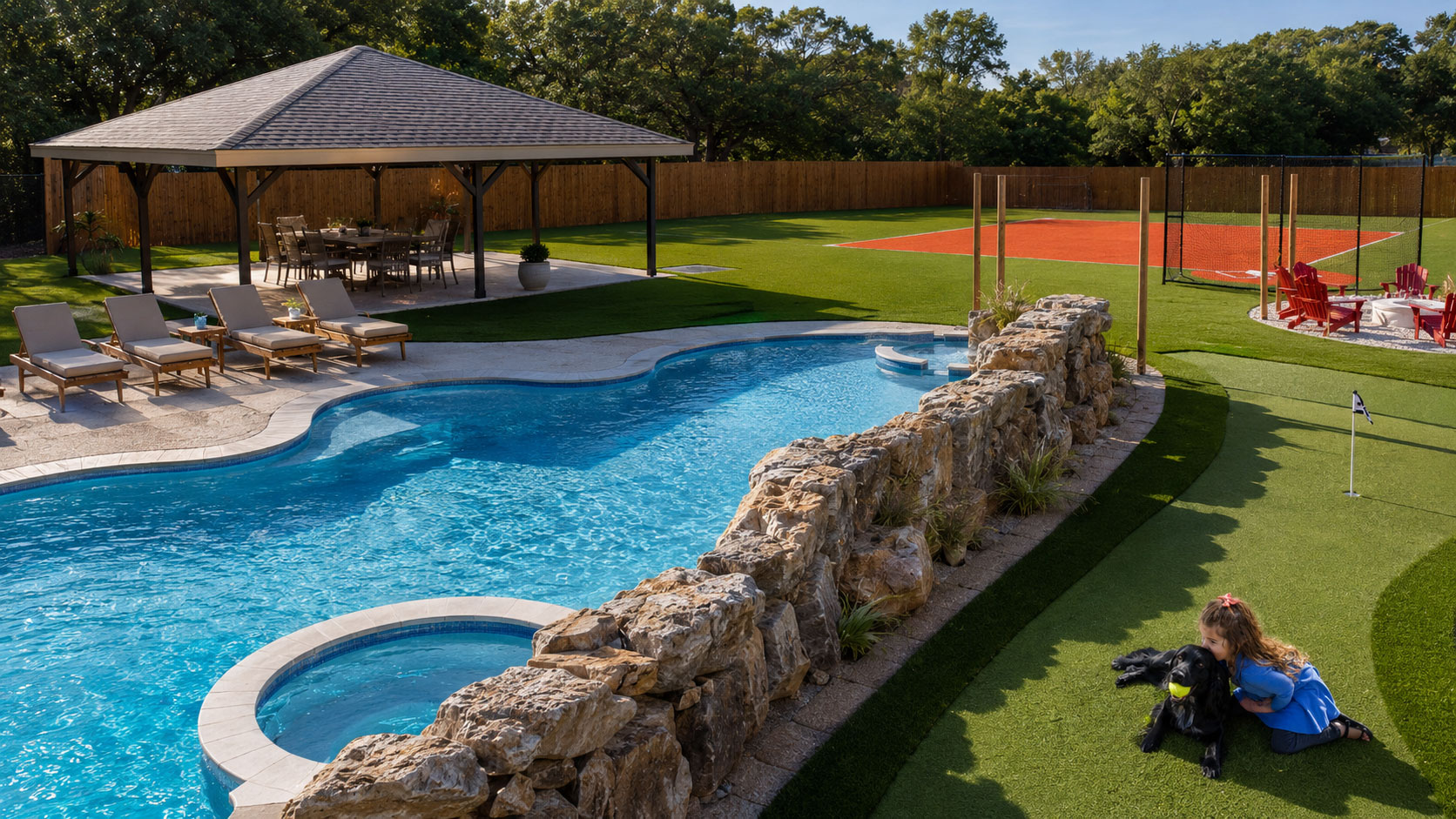
Pool decking and existing hardscape also change the plan. Drainage has to route around decking edges and hard surfaces rather than through them, which means the yard gets assessed for how water will actually move once the turf and base are in place — not just where it currently pools. One detail that surprises a lot of homeowners: low-e window coatings on nearby homes can reflect concentrated heat onto turf, similar to how they can affect vinyl siding or plastic furniture. That reflection point gets checked during the yard assessment, because it affects where certain turf products should or shouldn’t go, not just how the lawn looks.
The Lead and Toxicity Question, Answered Directly
Safety around kids and pets is one of the most common concerns homeowners bring up before installing turf, and it’s a fair one to ask directly. Waterloo Turf uses non-toxic, lead-free materials, which matters most for households with young children or pets that spend a lot of time face-down in the grass. If a product isn’t explicitly labeled and sourced as lead-free, that’s a reasonable question to ask any installer before signing anything — not just here.
Low Maintenance Is Not the Same as No Maintenance
Synthetic turf does eliminate mowing, watering, and fertilizing, but it is low maintenance, not zero maintenance. Pet owners specifically need to plan for occasional rinsing to manage odor, since urine and debris don’t break down the way they would in natural soil. A properly built base with real drainage capacity makes that rinsing effective; without it, odor and pooling become the same complaint. Light brushing to keep fibers upright after heavy use is also part of realistic upkeep, especially in a coastal climate where humidity can flatten fibers faster than in a dry one.
How Long Turf Actually Lasts in Biloxi Heat and Humidity
UV-stabilized, premium turf materials are built to hold color and structure in hot climates for roughly 12 to 20 years, which is the range that matters most in a market like Biloxi where summer sun exposure is intense and prolonged. That lifespan assumes the base and drainage were done correctly from the start; a good product installed over an inadequate base will not perform to that range, because the failure point becomes the ground underneath, not the turf itself.
HOA Approval Along the Gulf Coast
Many Biloxi and coastal Mississippi neighborhoods have HOA covenants that specifically address landscaping materials, and synthetic turf isn’t always automatically covered by existing language. Before installation, it’s worth asking your installer whether they can provide written specifications on pile height, base construction, and drainage design, since that’s typically what an HOA board wants to review before granting approval — not just a photo of the finished product.
Frequently Asked Questions
Does my yard need a full base rebuild if drainage already seems okay? Surface drainage that looks fine during a light rain can behave very differently under Biloxi’s heavier summer storms, so the base gets built to the same standard regardless of how the yard currently drains.
What happens to my existing irrigation system? The lines running through the turf area are capped off during installation so they stop drawing water and stop being a maintenance item.
Will turf near my pool deck or windows with reflective coatings be a problem? It can be, depending on heat reflection and drainage routing around hardscape, which is why those factors are checked during the yard assessment rather than assumed.
Is the turf actually maintenance-free? No — it’s low maintenance. Occasional rinsing and light brushing are still part of keeping it performing well, especially for households with pets.
Back