Why Pet Odor Problems Usually Start Underground, Not in the Turf
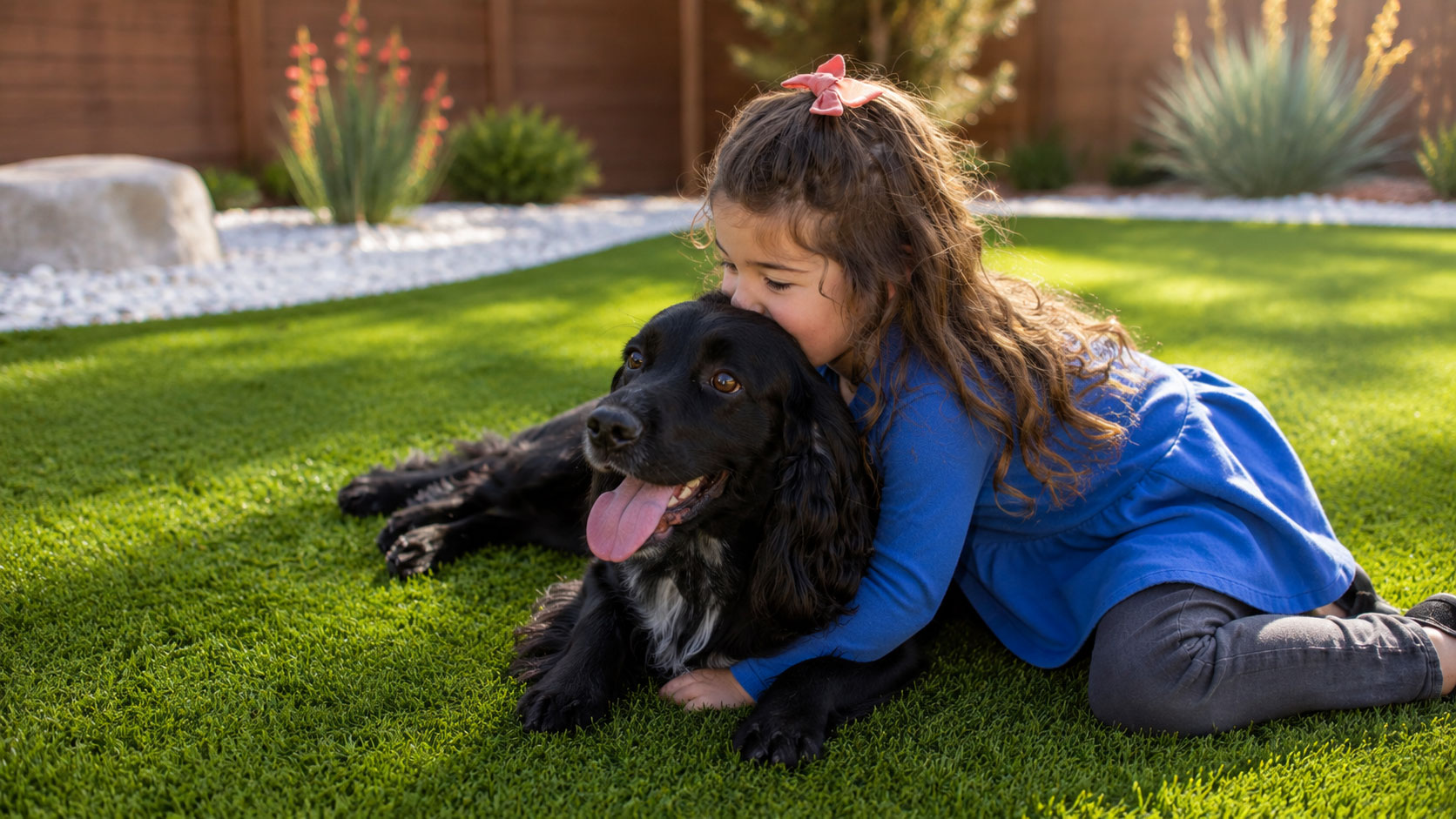
A Boca Raton backyard with two Labradors and a summer downpour is a good test case for any artificial lawn. If the water pools, if the smell shows up two days later when the humidity climbs, the turf itself is rarely the reason. The base underneath it usually is.
Most synthetic grass complaints we hear about locally trace back to the same root cause: urine and rainwater have nowhere to go. Boca Raton’s afternoon storms are fast and heavy, and a yard that was leveled and covered rather than properly excavated will hold moisture right where dogs relieve themselves. That trapped moisture, not the turf fibers, is what ferments into odor.
The Base Layer Is the Real Drainage System
Waterloo Turf will not install directly onto existing dirt or grass. That’s a hard line for us, not a preference. Soil compacts unevenly, holds water, and eventually causes wrinkling and low spots that turn into puddles. Instead, our crews excavate the area and build a compacted base of crushed stone or decomposed granite, engineered to move water down and away the same way a well-graded natural yard would drain, just faster and more consistently.
That base is porous by design. Urine passes through it rather than sitting on the surface, and the permeable turf backing above it lets rainwater follow the same path. When a customer tells us their old turf install smells no matter how often they hose it down, the base is almost always the missing piece, not the cleaning routine.
Capping Irrigation Lines: One Less Thing to Manage
Many Boca Raton yards still have irrigation heads running through the lawn area when we arrive. Leaving those active under turf creates a hidden problem: water gets pushed up from below with nowhere to evaporate, which works against the drainage base rather than with it. Our installation teams cap off existing irrigation lines in the turf footprint before the base goes down. It removes a recurring water bill for a lawn that no longer needs watering, and it keeps the sub-base doing its actual job instead of fighting an unnecessary water source.
A Realistic Rinsing Routine for South Florida Heat
We’re direct with customers about this: artificial turf is low maintenance, not zero maintenance. Pet owners specifically need a rinsing habit, not a deep-clean schedule. In most single-dog Boca Raton households, a hose-down of frequently used spots once or twice a week is enough to move waste through the base before it has a chance to sit and off-gas in the heat. During peak summer humidity, when odor tends to develop faster, some households shift to a lighter rinse every few days rather than one longer rinse weekly.
The goal isn’t saturation. It’s flushing the surface enough that the drainage layer underneath can do the rest.
When Enzyme Treatments Earn Their Place
Enzyme-based odor treatments break down the organic compounds in urine before they turn into ammonia smell, and they’re a reasonable step for households with more than one dog or yards that get heavy sun exposure and less airflow. They’re not a substitute for a properly built base. An enzyme treatment on top of a poorly drained sub-base will mask odor temporarily and lose that battle within a week or two. On a correctly excavated, crushed-stone base, the same treatment tends to hold up because it’s supporting a system that already drains, not compensating for one that doesn’t.
Multi-Dog Households: What Actually Changes
More dogs means more concentrated waste in the same square footage, usually near doors, fence lines, or shaded resting spots. For these yards, we look at drainage design a little differently during the initial assessment, sometimes recommending a deeper or more permeable base section in high-traffic zones rather than a uniform depth across the whole yard. Rinsing frequency typically increases too. A two-dog household in Boca Raton often does better with a light rinse every two to three days rather than a single weekly session, especially in the hot months when bacteria growth speeds up.
This is also where the Greener Cleaner Guarantee matters in practice. Our turf uses non-toxic, lead-free, UV-stabilized materials built to hold up in hot, humid climates for 12 to 20 years, but longevity and odor control depend on the system underneath performing correctly from day one. That’s the part we control at installation, and it’s the part worth asking about before signing off on any artificial grass proposal, not just for us.
FAQ
Does turf get hot enough in Boca Raton summers to make odor worse?
Heat speeds up bacterial breakdown of urine, so yes, odor tends to intensify faster in July and August than in cooler months. A properly drained base and slightly more frequent rinsing during peak summer offsets most of that.
Can I add a second dog to a yard that was designed for one?
Usually, but it’s worth reassessing rinsing frequency and checking whether high-traffic areas need attention. The base itself doesn’t need to change unless the original installation wasn’t built to spec.
Will an existing pool deck or hardscape affect drainage planning for a multi-dog yard?
It can. We map drainage around existing pool decking and hardscaping before installation so runoff has a clear path rather than pooling against a wall or deck edge, which matters more in yards with heavier use.
Is rinsing enough, or do I need enzyme cleaner from day one?
Most single-dog households do fine with rinsing alone on a correctly built base. Multi-dog households or yards with limited airflow often benefit from adding an enzyme treatment as a supplement, not a replacement, for regular rinsing.