Artificial Grass in Daphne’s Gulf Humidity: Drainage, Mildew, and Salt Air
The Eastern Shore Is Not a Brochure Climate
Daphne gets more rain than most places that sell artificial grass, and it gets it in bursts: afternoon storms that drop an inch in an hour, then sun and humidity that keep everything damp for days. Add salt air drifting off Mobile Bay and you have conditions that test a synthetic lawn in ways a desert yard never will.
None of that argues against turf. Homeowners here switch to it precisely because natural grass struggles with the same conditions. It does argue for an installation planned around water, and that is the Waterloo Turf Way in Daphne.
Storm Water Has to Have a Path
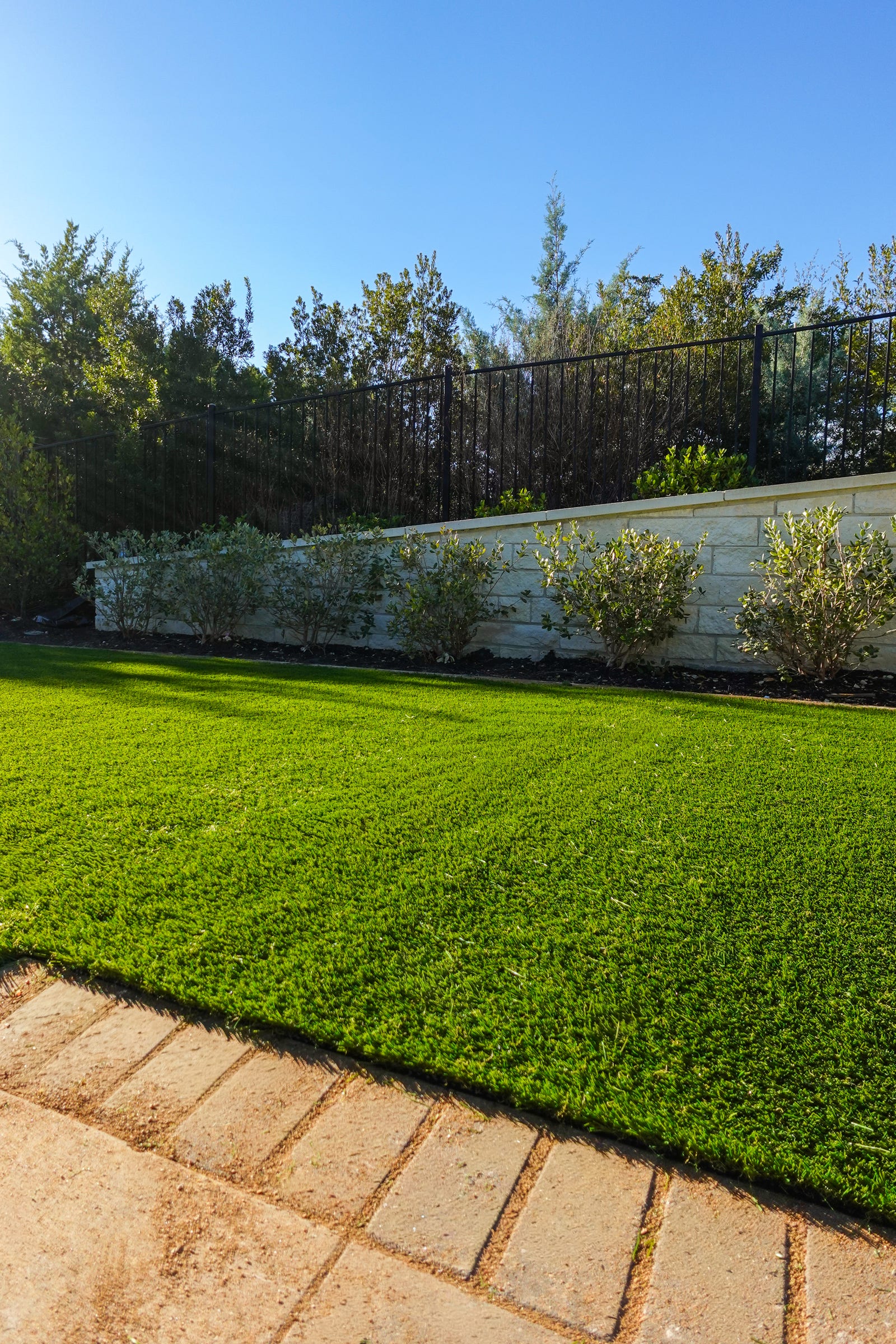
When a Gulf storm dumps rain on a synthetic lawn, the water passes through the turf backing in seconds. The question is what is underneath. On compacted native soil, the water sits, the backing stays saturated, and within a season you have soft spots and odor. On a properly excavated and compacted crushed stone or decomposed granite base, the water keeps moving the way it would through a well-drained natural lawn.
Waterloo Turf does not install turf directly on dirt, and Daphne is one of the markets where that rule matters most. We also plan drainage around existing hardscapes, patios, and pools before the base goes in, because a storm will find the low spot in a yard faster than any inspection.
Humidity and Mildew: What Actually Prevents It
Mildew on turf is a symptom of standing moisture, not a property of the material. A lawn that drains and dries between rains gives mildew nothing to grow on. A lawn that stays wet for days because the base is wrong will eventually show it, usually first in shaded corners and along fences.
This is where the honest version of low maintenance applies. Turf is low maintenance, not zero maintenance. In Daphne’s humidity that means an occasional rinse to move organic debris out of the infill and a light brushing in the shaded areas a few times a year. It is far less work than mowing through a Gulf summer, but it is not nothing.
Salt Air and UV
Yards closer to the bay get salt air, and the whole area gets intense summer sun. Our materials are UV-stabilized and rated for 12 to 20 years in hot climates, and they are non-toxic and lead-free. Salt does not degrade the turf fibers, but it does leave a residue on everything it touches, and the same occasional rinse that handles debris handles that too.
Pet Yards in a Wet Climate
Daphne pet owners ask about odor more than anything else, and in this climate the answer is drainage. Pet urine that passes through the backing and into a draining base does not linger. Pet urine that sits in saturated backing on top of clay does. If dogs are the main reason you are considering turf, pet turf products with high-flow backing are worth the conversation, and the base work underneath them is not optional.
Irrigation Lines and Afternoon Storms
Most Daphne yards have irrigation for the dry stretches, and those lines inside the turf footprint get capped. A live line under turf in a climate that already delivers plenty of water is a recipe for a strip that never dries out. Capping also ends the water bill for a lawn that no longer needs it.
Protecting Pool Decks, Beds, and Existing Landscaping
Eastern Shore yards often have pools, screened lanais, and established beds. We assess all of it before the crew arrives: where splash-out goes, how the turf edge meets the pool coping, and which plantings stay. We also check for low-e window reflections, which can concentrate heat on a small patch of turf and are easier to plan around than to fix later.
Frequently Asked Questions
Will artificial grass get moldy in Daphne’s humidity?
Not if it drains. Mildew needs standing moisture, and a properly built base does not provide it. Shaded corners benefit from an occasional brushing.
Does salt air shorten the life of the turf?
No. The fibers are UV-stabilized and unaffected by salt. Salt residue rinses off with the same routine that clears debris.
How does turf handle a tropical storm?
Water passes through and drains. After a major storm it is worth walking the yard for debris and checking edges, but a well-built base handles the volume.
Is turf safe for kids and pets in this climate?
Yes. The materials are non-toxic and lead-free, and a draining lawn stays cleaner than mud and standing water after a storm.
Next Step
If your Daphne yard turns into standing water every afternoon in July, the problem is drainage, and that is exactly what a proper turf installation fixes. Schedule a site assessment and we will plan the base around your yard’s water, not a generic diagram.
Back