What Actually Drives Artificial Turf Pricing in Daphne
Three Quotes, Three Very Different Numbers
If you’ve called around Daphne for artificial grass quotes, you’ve probably noticed the range is wide. One installer walks your yard for fifteen minutes and emails a number. Another spends an hour checking your drainage, your pool decking, and your irrigation lines before saying a word about price. Those two experiences produce different quotes because they’re pricing different jobs, even if the square footage on paper looks the same.
The biggest variable isn’t the turf itself. It’s what happens underneath it.
The Base Prep Line Item Big-Box Kits Skip
Waterloo Turf Daphne won’t install turf directly onto existing dirt or grass, and that’s not a marketing line, it’s a structural decision. Skipping excavation might save a few hundred dollars on quote day, but it’s also how yards end up with wrinkling, standing water after a Gulf Coast downpour, and turf that shifts underfoot within a couple of seasons.
Our process involves excavating the area and compacting a crushed stone or decomposed granite base built to mimic natural drainage. That base is the part of the job you’ll never see again once the turf is down, and it’s also the part that determines whether your lawn still looks right in year eight. Big-box turf kits and DIY installs typically price around the roll of grass. Professional installation prices around the ground that grass sits on.
What Changes the Total for a Daphne Yard Specifically
A few local realities shift the number up or down before materials even enter the conversation:
- Existing irrigation. We cap off irrigation lines running through the turf footprint so you’re not paying to water ground that no longer needs it. That’s a line item, but it’s also the thing that stops a future water bill surprise.
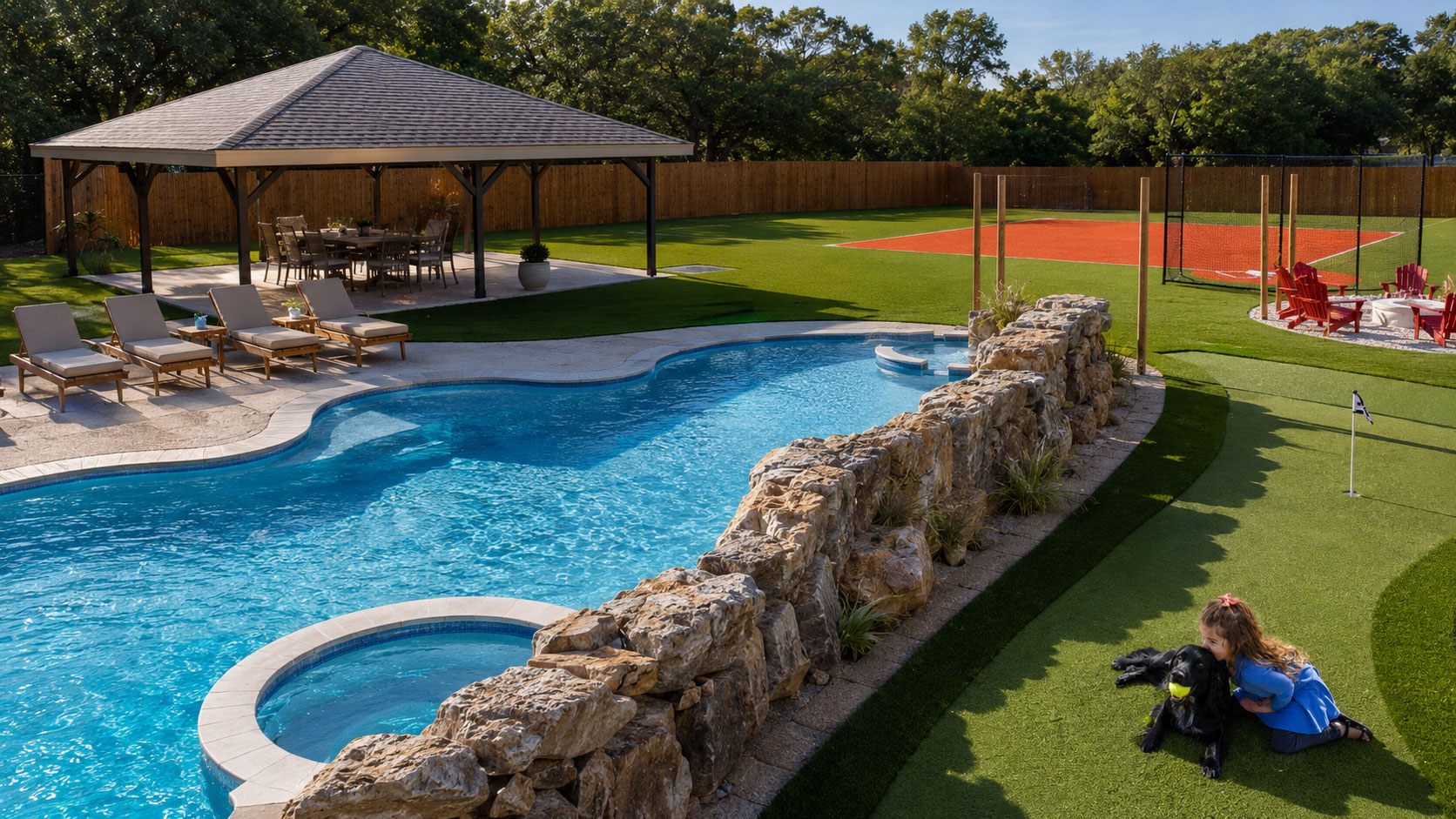
- Pool decking and hardscapes. Yards with pools, retaining walls, or existing patios need drainage planned around those structures, not just around the lawn perimeter. We also check for low-e window reflections nearby, since concentrated sunlight off certain windows can affect turf in a specific spot even when the rest of the yard is shaded.
- What the space is for. A straightforward front lawn is a different project than a play area that needs impact-rated infill, a backyard putting green with cup placement, or pet turf with an antimicrobial backing built for drainage and odor control.
- Obstacles and edges. Curved beds, tree root systems, and multiple access points all add labor time that a flat, open rectangle doesn’t.
Materials Aren’t Where Most Homeowners Should Cut Corners
We use non-toxic, lead-free, UV-stabilized turf built to hold color and structure in hot, humid climates for 12 to 20 years. That range exists because performance depends on foot traffic, sun exposure, and how well the base underneath it was built. Cheaper backing or thinner blade material will usually show fading or matting well before that window closes, especially through Alabama summers.
It’s worth being direct about one thing: artificial turf is low maintenance, not zero maintenance. It still needs occasional rinsing and light brushing, particularly in pet areas, to keep drainage and appearance where they should be. Anyone quoting you a completely hands-off lawn is describing a different product than what we install.
HOA Neighborhoods and the Approval Question
A lot of Daphne subdivisions have architectural review requirements, and turf specifications sometimes need to go through that process before installation starts. This can affect timing more than price, but it’s worth raising with your installer early rather than after a contract is signed, since some HOAs have preferences around pile height, color blending, or edge treatment.
Financing and How to Read an Estimate
If the upfront number is the sticking point rather than the value of the project, ask about current financing options when you request your quote. Terms and availability can change, so the honest answer is to get the specifics directly rather than relying on a number that might be outdated by the time you’re ready to book.
When you’re comparing any quote against ours, the estimate should tell you what base material is going under the turf, whether irrigation lines are being capped, and what drainage plan is in place around pools or hardscaping. If a quote doesn’t mention the ground prep at all, that’s usually because there isn’t much of one planned.
A Few Questions Daphne Homeowners Actually Ask
Does the base prep really matter in a climate this humid? Yes, more than in a dry climate. Standing water and poor drainage are the two things that cause turf to smell, mat down, or wrinkle, and both are base-prep problems, not turf-quality problems.
Can you install pet turf and a putting green in the same yard? Different zones of the same yard can use different turf products, since pet areas and putting surfaces have different backing and infill needs. That’s a design conversation during the walkthrough, not an add-on after the fact.
What happens to my sprinkler system? The irrigation lines running through the turf area get capped off during installation, which is also how you stop paying to water a lawn that no longer needs it.
If you want a number that actually reflects your yard, not a generic square-footage rate, request a walkthrough where we can look at your drainage, irrigation, and any pool decking or HOA requirements before writing the estimate.
Back