
What Drives Your Denver Artificial Grass Quote Up or Down
Why Two Denver Quotes for the Same Yard Can Look Nothing Alike
You call three Denver turf installers about the same backyard, and the quotes come back thousands of dollars apart. That gap usually isn’t a sales tactic. More often, it means the quotes aren’t actually for the same scope of work, even though they’re describing the same square footage. Artificial grass installation cost in Denver is driven less by the turf itself and more by what happens underneath it, around it, and before it ever gets rolled out.
If you’re trying to make sense of a quote, or three of them, the factors below are where the real cost differences live.
The Base Build Is Where Most of the Cost Variance Starts
At Waterloo Turf Denver, base preparation is non-negotiable. We don’t install turf directly onto existing dirt. Instead, the crew excavates the area and compacts a crushed stone or decomposed granite base designed to mimic natural drainage and keep the surface from wrinkling later. Denver’s freeze-thaw cycles put real stress on a base that isn’t compacted correctly, which is part of why this step takes time and equipment, and why it shows up as a meaningful line item in any honest quote.
A quote that skips excavation and base compaction, or treats it as optional, is a lighter scope of work. It may look better on paper, but it’s not the same job as one that includes proper subgrade preparation.
Material Grade and UV Stabilization Affect the Long-Term Math
Turf isn’t one product. Backing weight, blade shape, and whether the material is UV-stabilized all change the price, and they also change how the lawn performs through a Denver summer. We use non-toxic, lead-free materials built to hold up under strong direct sun, which matters given how much direct sun a south- or west-facing yard gets here. Lower-grade turf without UV stabilization tends to fade and degrade faster in that same exposure, so a cheaper quote today can mean a replacement conversation sooner than expected.
It’s also worth being direct about what turf is and isn’t: it’s low maintenance, not zero maintenance. It still needs occasional rinsing and light brushing to stay in the condition you paid for. Any quote or conversation implying you’ll never touch it again is setting expectations the product can’t meet.
Pet Turf, Putting Greens, and Playground Turf Carry Different Line Items
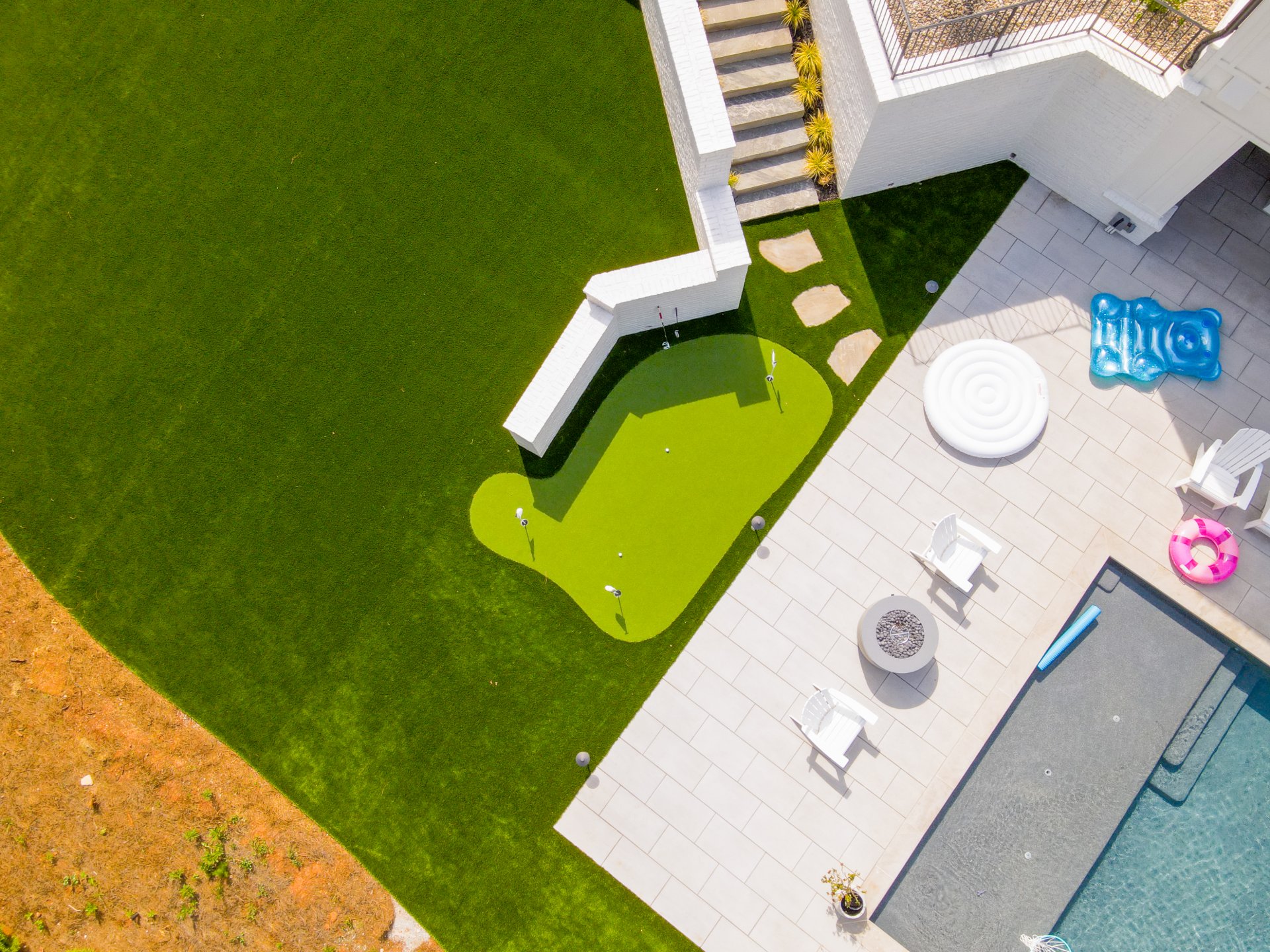
Standard lawn turf, pet turf, putting greens, and playground turf are not priced the same way because they’re not built the same way. Pet turf typically needs a drainage-focused base and infill designed to manage odor and moisture, which matters in a market where owners are specifically concerned about pet smell after rain or snowmelt. Putting greens involve additional grading and sometimes multiple turf types for the green versus the fringe. Playground turf has its own safety and cushioning considerations. If you’re comparing quotes across these categories, make sure each one specifies which application it’s actually scoped for.
HOA Specs Can Change the Job Before Installation Starts
In many Denver neighborhoods, an HOA has a say in pile height, color, or even whether synthetic turf is allowed in visible areas. That review process can affect which product is used and how the install is documented, which in turn affects the quote. If your property sits in an HOA, it’s worth confirming early whether samples or specs need approval, since changing turf selection after a quote is written is one of the more common reasons a number moves.
Protecting What’s Already on the Property
Part of a Waterloo Turf Denver site visit involves assessing the yard for things that don’t show up in a square-footage estimate: existing irrigation lines, pool decking, established landscaping, and even low-e window reflections that can affect turf in certain spots. Existing irrigation lines in the turf area get capped off as part of the install, which eliminates ongoing watering costs for that zone but does require the extra step of locating and sealing them correctly. Drainage also has to be planned around hardscapes and pools rather than assumed, since water that used to soak into soil now needs somewhere specific to go.
None of this is optional if you want the lawn to drain properly and your existing features to stay intact. It is, however, work that a quote focused purely on turf material and labor can leave out.
What a Lower Quote Might Be Skipping
When a number comes in noticeably lower than others you’ve received, it’s worth asking what’s missing rather than assuming it’s simply a better deal. Common gaps include no excavation or base rock, no irrigation capping, standard turf substituted for pet or putting-green turf, or no plan for drainage near a pool or patio. These aren’t always disclosed upfront, which is why a side-by-side comparison of scope, not just the final number, tells you more than the price alone.
FAQs on Denver Turf Pricing
Does Denver’s freeze-thaw cycle really affect how my base needs to be built? Yes. A compacted crushed stone or decomposed granite base is built specifically to handle drainage and ground movement through seasonal temperature swings, which is part of why base work is treated as mandatory rather than optional.
Will capping my irrigation lines affect water pressure to the rest of my yard? Capping is done specifically within the turf area, and it’s a standard part of the install process aimed at removing ongoing water use for that zone without altering irrigation elsewhere on the property.
Does my HOA need to approve turf samples before I get a final quote? Many Denver HOAs have specifications on pile height or color, so it’s worth checking early. Confirming this before finalizing material selection can prevent a quote from needing to be revised later.
Why is pet turf priced differently from standard lawn turf? Pet turf typically requires a drainage-oriented base and specific infill to manage moisture and odor, which adds steps beyond a standard residential lawn install.
Getting a Quote That Reflects the Actual Job
If you’re holding a quote and aren’t sure what it includes, the most useful next step is a site walk where base depth, drainage plan, irrigation handling, and material grade are spelled out in writing before any work starts. That’s how a Waterloo Turf Denver estimate is built, and it’s the standard we’d encourage you to hold any quote to, including ours.
Request a Waterloo Turf Denver site visit to get a written quote that itemizes base prep, drainage, irrigation capping, and material grade, so you can compare it directly against any other estimate you’ve received.
Back