Why Port Charlotte Pet Owners Are Ditching Muddy Yards for Fast-Draining Turf
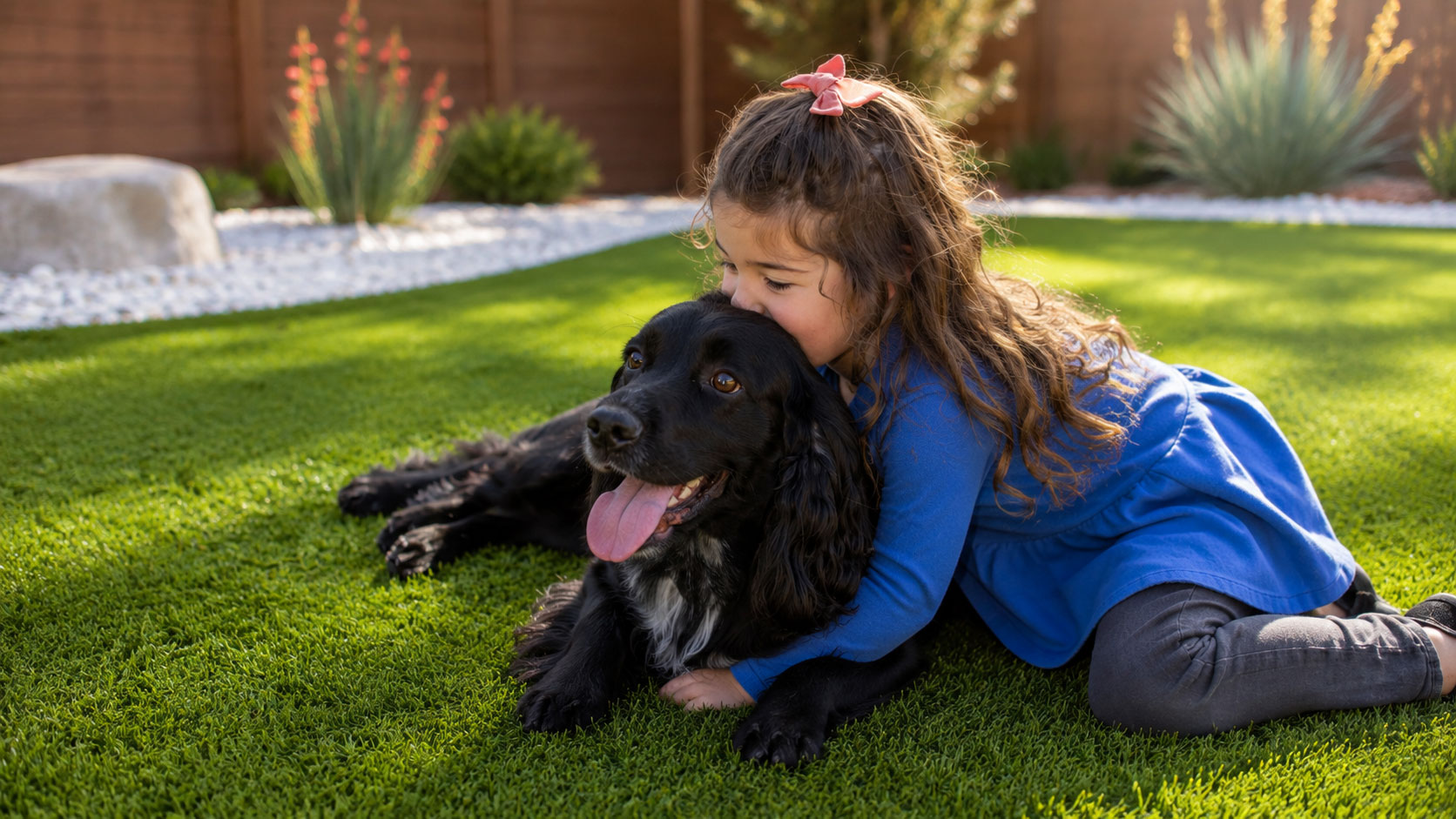
A Labrador tracking wet, sandy paw prints across the lanai is a familiar scene in Port Charlotte once the afternoon storms start rolling in. Add a second dog, a low spot in the backyard that never quite dries out, and a few weeks of Southwest Florida humidity, and most homeowners aren’t relaxing outside — they’re mopping floors and Googling ways to stop the mud before it starts.
That’s the exact situation that pushes a lot of local pet owners toward artificial turf. But it’s also where a lot of turf installations quietly fail, because the odor and drainage complaints people associate with synthetic grass almost never come from the grass blades themselves.
The Odor Problem Usually Isn’t the Grass — It’s What’s Underneath
When a customer tells us their neighbor’s turf smells like a litter box by July, the cause is rarely the product. It’s the installation. If turf goes down directly over existing soil with no drainage layer, urine has nowhere to go. It sits, the soil holds moisture, and heat does the rest. That’s a base problem, not a fiber problem.
We don’t install turf directly onto existing soil, full stop. It’s a line we won’t cross regardless of budget pressure, because it sets up exactly the odor and pooling issues that give synthetic grass a bad reputation in humid climates like ours.
Building a Base That Drains Like Natural Ground
Every Waterloo Turf installation starts with excavation, not laying grass over what’s already there. We remove the existing soil and grade a base of crushed stone or decomposed granite designed to move water and waste through the system the way natural, well-draining soil would. This base also prevents the wrinkling and shifting that shows up a year or two later when a yard was installed on an inadequate foundation.
For pet owners specifically, this base is the actual odor-control system. Urine passes through the permeable turf backing and drains down through the compacted stone instead of pooling on the surface. A quick hose-down after your dog uses the yard, done occasionally rather than daily, is usually enough to keep things fresh — this is genuinely low maintenance, not zero maintenance, and part of our job is being upfront about that distinction from the first consultation.
What Happens to Irrigation, Pool Decking, and Existing Landscaping
Most Port Charlotte properties we work on already have an irrigation system, a pool, or established landscaping bordering the area getting turf. Before any excavation starts, our installers cap off the irrigation lines running through the turf footprint. That’s not optional — it stops you from paying to water grass that’s no longer there, and it removes standing water sources that would otherwise undermine the drainage base.
We also walk the yard for site-specific issues before installation: how water currently moves around the pool deck, whether nearby low-e windows are reflecting concentrated heat onto a section of the yard, and how the new turf grade will meet existing hardscaping without creating a new low point where water collects. Skipping this step is how a yard ends up with a soggy corner six months after installation.
Material Safety Questions Every Pet-Owning Parent Asks
The safety question comes up in almost every consultation with families and pet owners, and it’s a fair one. We install non-toxic, lead-free turf, and the UV-stabilized materials we use are built to hold up under direct Florida sun for 12 to 20 years without breaking down into something you’d worry about your dog chewing on or your kids rolling around in. That durability against heat and UV exposure is backed by our Greener Cleaner Guarantee, which reflects the standard we hold every installation to.
Getting Past HOA Review With a Pet-Friendly Yard
HOA approval is one of the more common hesitations we hear from Port Charlotte homeowners, especially in communities with strict landscaping guidelines. We can’t promise how any individual HOA board will vote, but we can tell you what typically matters to them: turf color and pile height that read as a natural lawn rather than an obvious synthetic surface, and a drainage plan that doesn’t create runoff onto a neighbor’s property. Bringing product specs and a drainage plan to your HOA review, rather than just a general request, tends to move the conversation along faster.
What Upkeep Actually Looks Like Once It’s Installed
We won’t tell you this is a zero-maintenance yard, because it isn’t. Expect occasional rinsing after your pet uses the space and light brushing to keep the fibers standing upright, especially in high-traffic zones. What you’re trading away is mowing, watering, reseeding bare patches, and the mud that comes with every rainy season — which is where the "Saturdays back" idea actually plays out in practice, rather than as a slogan.
FAQ
Does artificial turf actually eliminate pet odor, or just reduce it?
A properly built drainage base removes the standing moisture that causes most odor, but odor control still depends on periodic rinsing. Turf installed without a drainage layer is where odor complaints usually originate.
Will my Port Charlotte HOA approve turf if I have dogs?
Approval decisions are made by individual HOA boards, so we can’t guarantee an outcome. Choosing a natural-looking pile height and color, paired with a clear drainage plan, is what tends to support a smoother review.
How does this turf hold up during a Southwest Florida summer with dogs running on it daily?
The UV-stabilized materials we install are rated for 12 to 20 years of exposure to sustained heat and sun, which is the primary stress test in this climate — more so than pet traffic itself.
If muddy paws and standing water are turning your backyard into a chore instead of a place to relax, call Waterloo Turf Port Charlotte at (941) 394-1979 for a free estimate. We’ll walk your yard, check drainage around your pool and irrigation lines, and tell you honestly whether turf is the right fix before you commit to anything.
Back