
The Photo Checklist to Run Before You Sign Off on Your Turf Install
Most homeowners in South Nashville and Franklin don’t think to document their turf install until something feels off weeks later, a soggy corner near the pool decking, a seam lifting at the edge of the patio, a smell that shouldn’t be there. By then it’s harder to prove what the base actually looked like before the grass went down. The better time to take photos is before the crew leaves the job site, while the base, seams, and drainage points are still visible or easy to check.
This isn’t about distrust. It’s about having a record, especially if you’re also submitting photos for an HOA architectural review or want documentation for a warranty conversation down the road.
Start at the Edges, Not the Middle
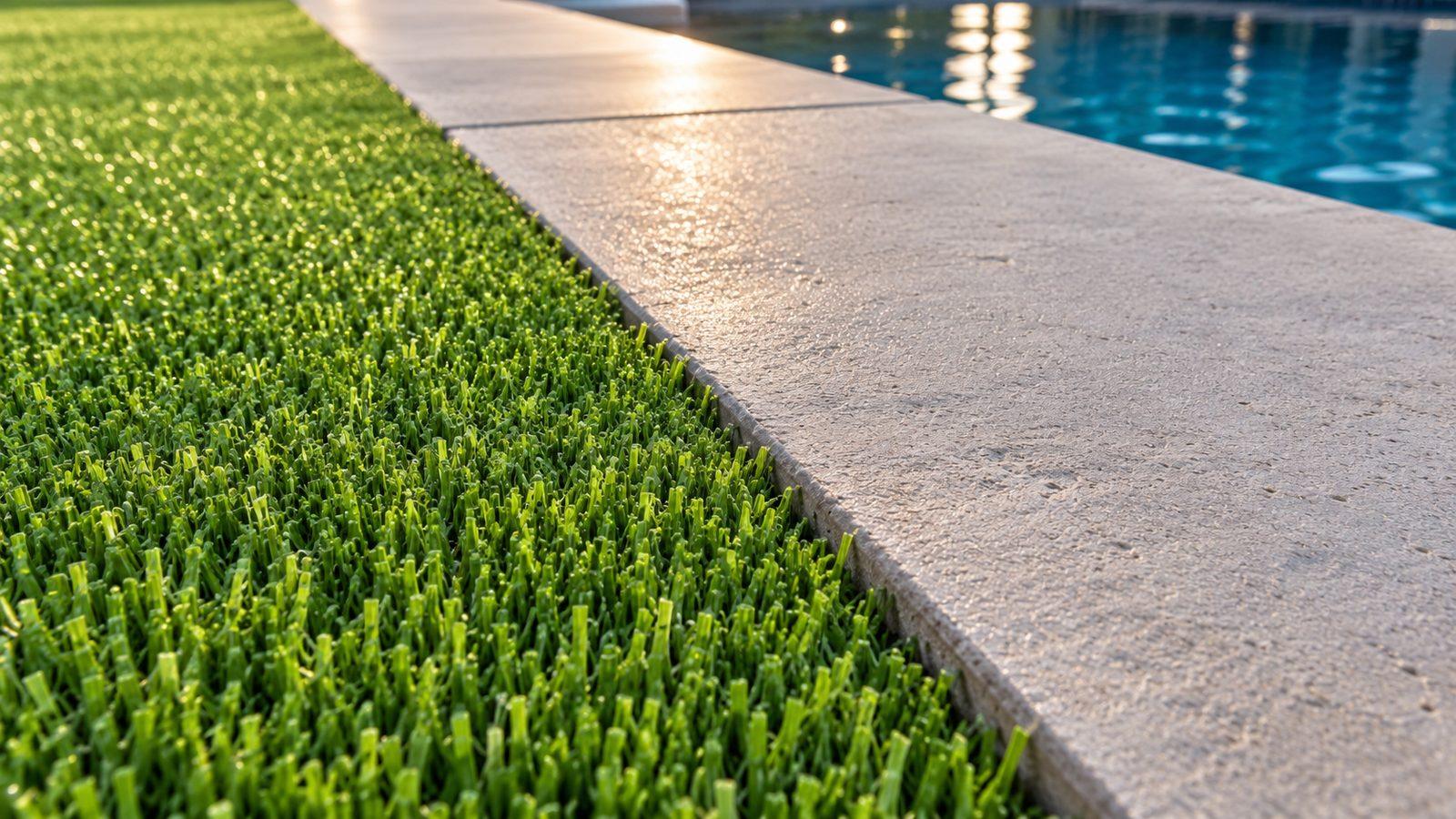
The middle of a turf lawn almost always looks fine right after install. Problems show up first at the edges, where turf meets a patio, a fence line, a flower bed, or pool decking. Get down at ground level and photograph how the edge is secured: is it stapled into a firm base, tucked against a hard border, or does it look like it’s floating on loose soil? A clean, tight edge along hardscape is also one of the details HOA reviewers tend to check first, so these same photos can double as documentation if your neighborhood requires post-install approval.
What the Base Photos Should Actually Show
This is the step that matters most and the one homeowners are least equipped to judge after the fact, because it’s buried under the grass. Waterloo Turf’s installation standard, what the company calls the Waterloo Turf Way, does not allow turf to be laid directly onto existing dirt. The base has to be excavated and replaced with compacted crushed stone or decomposed granite, built to mimic how water moves through natural soil and to keep the surface from wrinkling or shifting later.
If you were on-site during excavation, you should have photos of that stone or granite base before the turf ever went down, ideally showing depth and a compacted, even surface, not loose gravel dumped and left. If you don’t have those photos, ask whether the installer took them; a company following a strict base standard should have no issue sharing that documentation, because it’s the step they’re most likely to stand behind.
Run the Hose Before You Sign Anything
Drainage problems rarely show up on a dry, sunny afternoon. Before final sign-off, run a hose over a few different sections of the lawn (especially areas near the pool deck, downspouts, or other hardscape) and photograph how the water moves. It should soak through and disperse, not pool on the surface or run off in one direction toward a foundation or fence line. Standing water after rain is one of the more common concerns homeowners raise about turf, and it’s almost always a base or drainage-planning issue rather than a flaw in the turf material itself.
Irrigation: Capped, Not Just Buried
If the yard had a sprinkler system before installation, ask specifically whether those lines were capped off or simply covered over. Waterloo Turf’s process calls for capping existing irrigation lines in the turf area, which stops water costs tied to a system you no longer need running under grass that doesn’t require it. A quick photo of the capped valve or line, taken before the trench is closed, is worth keeping. It’s hard to verify after the fact once everything is covered.
Seams, Infill Level, and Early Fade Signs
Walk every visible seam and take a photo straight down, not at an angle. Seams should sit flat with no visible gap or ridge. Infill should look even across the lawn, not bare in high-traffic paths or piled at the edges. UV-stabilized turf material is built to hold color in hot, sun-heavy Tennessee summers over a 12 to 20 year lifespan, but that only holds up if infill and seam work were done correctly at install: uneven infill accelerates wear in exactly the spots that get walked on most.
Pet Areas Need Their Own Documentation
If part of the install is a dedicated pet turf zone, photograph the base and drainage detail in that section separately. Odor control after rain or heavy use depends heavily on how well that specific area drains, since pet zones deal with more liquid volume than a typical play or patio section. If drainage looks slower there than in the rest of the yard, that’s worth raising with the installer while they’re still on-site.
When the Photos Don’t Match What Was Promised
Being turf that’s low maintenance, not zero maintenance, is part of being upfront about what the material still needs: occasional rinsing, light brushing, and correct water flow underneath it. If your photos show turf laid over what looks like untouched dirt, seams sitting loose, or irrigation lines that were never addressed, those are reasonable questions to bring back to the installer before final payment, not after.
FAQs
Should I take these photos myself, or ask the crew to send them?
Both, when possible. Ask the installer for base and irrigation photos taken during the work, since those steps get covered up quickly, and take your own edge, seam, and drainage photos once the lawn is finished.
Is a little water pooling near the pool deck normal right after installation?
A properly graded and based lawn should disperse water rather than hold it, even near hardscape. If pooling shows up consistently in the same spot after a hose test, it points to a drainage or base issue in that section rather than something that will resolve on its own.
Do these photos matter for HOA approval too?
Often, yes. Many HOA reviews focus on clean edges, consistent color, and a finished look along visible borders, the same details a base and edge inspection already covers.
Next Step
If you’re partway through an install, or reviewing one that was recently finished in South Nashville or Franklin, Waterloo Turf South Nashville can walk the base, drainage, and seam details with you in person and explain what should have been done at each stage. Call to schedule that walkthrough before final sign-off.
Call Waterloo Turf South Nashville to schedule an in-person walkthrough of your base, drainage, and seam work before you sign off on a new or recent installation.
Back