

Salt, Sand, and Afternoon Storms: Artificial Turf on Jacksonville’s Coast
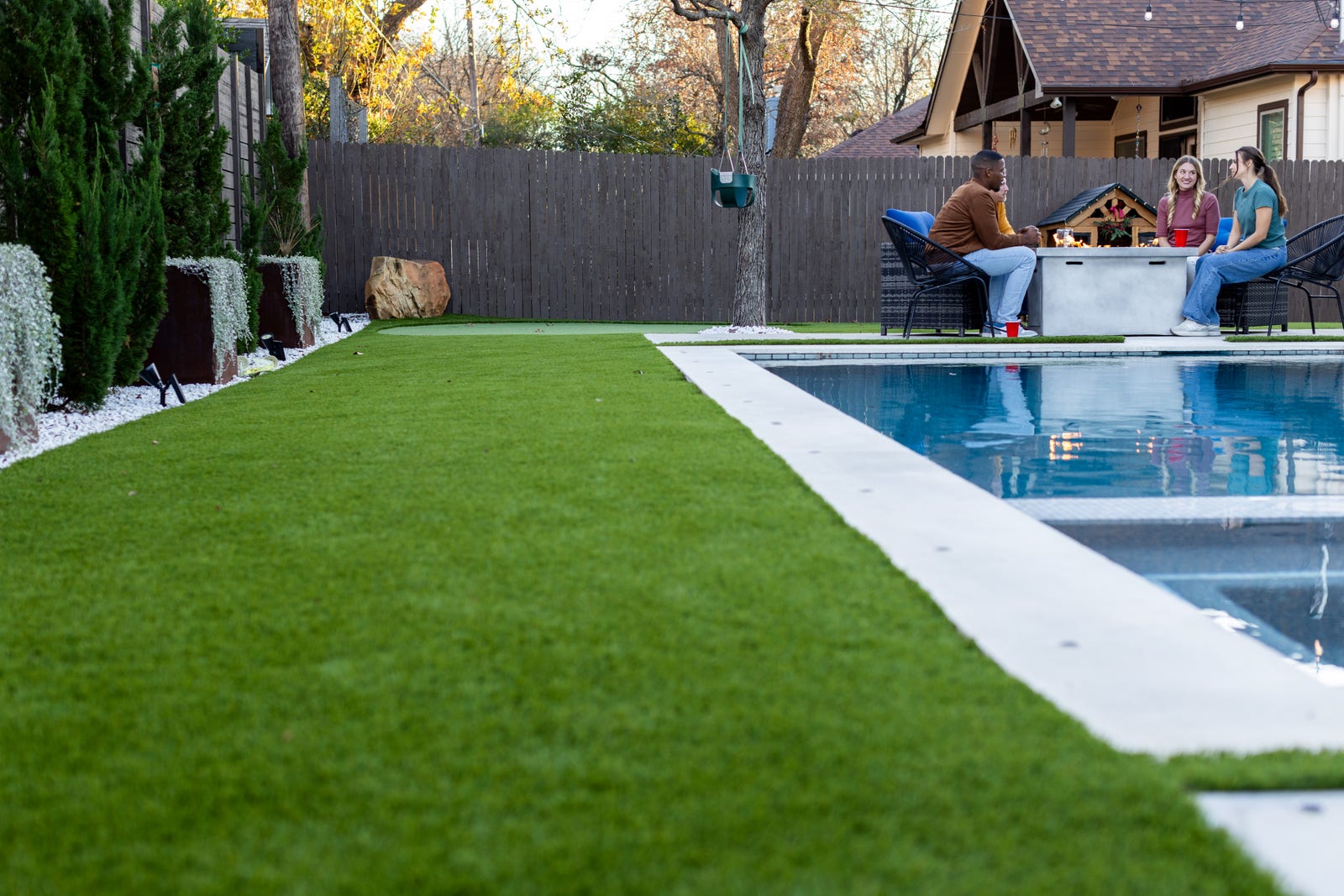
Coastal Yards Are Not Inland Yards
Drive from the Westside out to the Beaches or down to St. Augustine and the ground under your feet changes. Inland Jacksonville lots sit on clay and loam; coastal lots sit on sand, with a water table close to the surface and salt in the air year round. Add the afternoon storms that roll through most summer days and you have a specific set of conditions that a synthetic lawn either handles or does not, depending almost entirely on what is underneath it.
Sand Does Not Hold a Shape
Sandy soil shifts. Walk on it, soak it, let it dry, and it moves. Turf laid directly on sand follows that movement and shows it as wrinkles, soft spots, and seams that open. Waterloo Turf does not install turf on bare soil in any market, and on the coast that means full excavation and a compacted crushed stone or decomposed granite base that gives the turf a stable layer the sand cannot provide. The compaction step is the one to ask any installer about, because a base that is spread but not compacted behaves like the sand beneath it.
The Water Table and Where Storm Water Goes
Coastal lots often sit a short distance above groundwater, and during the wet season the ground can be saturated before the afternoon storm even arrives. A synthetic lawn passes water through its backing immediately; the base has to carry it somewhere. Our site assessment maps where water sits after a storm and how it moves around existing hardscapes, pool decks, and lanais, and the base is graded to send water toward the yard’s existing drainage path rather than toward the house or a neighbor.
For yards that already pool after rain, grading is the fix and the turf is what makes the fix permanent.
Salt Air and Materials
Salt does not degrade turf fibers. Our materials are UV-stabilized, non-toxic, and lead-free, rated for 12 to 20 years in hot climates, and the coast is inside that range. What salt air does is leave a film on every surface, turf included, which means a slightly more frequent rinse than an inland lawn. That is the honest version of low maintenance, not zero maintenance.
Afternoon Storms and the Debris They Leave
Summer storms drop heavy rain and scatter palm fronds, Spanish moss, and sand. The rain drains through a proper base in minutes. The debris needs to be blown off so it does not break down into the infill, and blown sand in particular should be rinsed out of the fibers rather than left to pack down. A quick walk after a big storm to clear debris and check edges is a reasonable coastal routine.
Pet Yards Near the Beach
Dogs that run on the beach bring sand and salt water home. Pet turf with high-flow backing on a draining base handles rinse water and urine the same way it handles rain, and the rinse that clears the sand also clears the odor. Expect to rinse the areas the dogs favor more often than the rest of the lawn.
Pools, Lanais, and Irrigation
Coastal homes often have pools and screened enclosures. We secure turf edges to the pool coping and lanai hardscape rather than laying them in place, and we protect existing decking and plantings during the work. Irrigation lines inside the turf footprint get capped; a live line under turf in a climate that already delivers water every afternoon is a strip that never dries. We also check for low-e window reflections, which can concentrate heat on a patch of turf and are easier to plan around than to repair.
Frequently Asked Questions
Can artificial turf be installed on sandy coastal soil?
Yes, but not directly on it. The sand is excavated and replaced with a compacted stone base that does not shift.
Does salt air shorten the life of the turf?
No. The fibers are unaffected by salt. Salt film rinses off as part of normal care.
What happens to turf in a tropical storm?
Water drains through the base. Afterward, clear debris and check edges. A properly installed lawn comes through without damage.
How is a coastal installation different from an inland one?
Same materials and the same base, with more attention to grading for a high water table and to rinsing for salt and blown sand.
Next Step
If your yard is near the coast and natural grass has given up on it, the base is where a turf installation succeeds. Schedule a site assessment with Waterloo Turf and we will plan it for sand, salt, and storms.
Back
