Playground Turf: A Parent’s Guide to Comfortable, Low-Maintenance Play Areas
Playground Turf: A Parent’s Guide to Comfortable, Low-Maintenance Play Areas
Mulch gets tracked into the house. Pea gravel ends up in shoes and, eventually, in mouths. Natural grass under a swing set can turn into a bare dirt patch, and that patch becomes mud every time it rains. If you have watched any of that happen in your own yard, you already understand why many parents, schools, and daycare centers consider playground turf.
Turf under a play structure is different from the artificial grass commonly used in a front yard. A play area needs a surface designed around frequent activity, easy cleanup, and the way the space will be used. Here is what to consider when choosing turf for playgrounds.
What Makes Playground Turf Different From Regular Artificial Grass
Standard landscape turf is usually selected for appearance and everyday foot traffic. Playground turf is chosen with active use in mind. Those different priorities affect the materials and installation.
- Fiber and pile height: Play area turf often has a shorter, denser pile. Long blades can look lush, but they may flatten under constant running, sliding, and landing. Shorter fibers are easier to brush back into place.
- The layer underneath: An added cushioning layer can make the surface feel more comfortable during everyday play. The best option depends on the equipment, site, and intended use.
- Backing and drainage: A permeable backing allows water and other liquids to move through the surface instead of collecting where children play.
- Infill choice: Different infill options affect how the turf feels, how it responds to heat, and how much routine care it needs.
Together, these parts create an artificial grass play area that is better suited to regular activity than a basic lawn installation.
Comfort Starts Below the Surface
The area beneath play equipment deserves careful planning. A toddler climber and a tall play structure are used differently, so the same turf setup may not suit both spaces.
When requesting an estimate, ask the installer what type of cushioning layer is included and why it is being recommended for your equipment. The answer should take into account the layout of the play area, how children will use it, and the conditions on the property.
Ask this before you sign: What materials will go beneath the turf, and why are they a good fit for this play area?
A clear answer will help you compare proposals and understand what is included in the project.
Is Playground Turf a Good Choice for Children?
This is one of the first questions parents ask. A well-planned synthetic playground turf system provides a consistent surface for running and playing. It also removes the need to apply lawn products such as pesticides, herbicides, and fertilizer to the play area.
Heat is a fair concern. Turf absorbs sunlight, so any synthetic surface can feel warmer than shaded natural grass on a hot afternoon. Lighter-colored fiber blends, cooling infills, a quick rinse, and shade from a tree or structure can help make the area more comfortable.
If the space sits in full sun all day, mention that to your installer early so it can be considered when choosing materials.
Drainage and Cleanliness
A play area collects plenty of messes, including spilled drinks, rain, mud from shoes, leaves, and pet waste. Good drainage makes routine cleanup easier and helps prevent moisture from lingering on the surface.
In a properly prepared installation, liquid moves through the turf and into the layers below. The base also helps move water away and keeps the finished surface even. This work is mostly invisible once the project is complete, but it has a major effect on how the area performs over time.
If your play area also serves as the dog’s territory, tell your installer. Pet use may affect the recommended turf, infill, drainage approach, and cleaning routine. One installation can often accommodate both children and pets when the space is planned with both uses in mind.
Playground Turf vs. Mulch, Rubber, and Natural Grass
Every surface comes with tradeoffs. Here is a practical comparison.
| Surface | Where It Wins | Where It Costs You |
|---|---|---|
| Wood mulch | Low upfront cost and a softer feel when freshly installed | Moves around, needs regular top-ups, can hide insects, and gets tracked indoors |
| Loose rubber | Comfortable underfoot and long-lasting | Can migrate out of place, become hot in direct sun, and travel home on shoes or clothing |
| Natural grass | Low starting cost and cooler underfoot | Wears down under swings and slides, turns to mud, and needs watering and regular lawn care |
| Playground turf | Consistent surface, effective drainage, no loose material, and year-round usability | Higher upfront investment, with long-term performance depending heavily on installation quality |
What Maintenance Actually Looks Like
There is no mowing, watering, or reseeding the bare patch under the swing every spring. Instead, routine care usually includes:
- Rinsing the surface periodically, especially in high-use or pet areas.
- Brushing the fibers in busy areas so they stand back up.
- Removing leaves and debris before they settle into the infill.
- Checking infill levels in the busiest spots and adding more when needed.
That is the basic routine. For a more detailed overview, read our artificial turf maintenance guide.
Where Playground Turf Makes the Most Sense
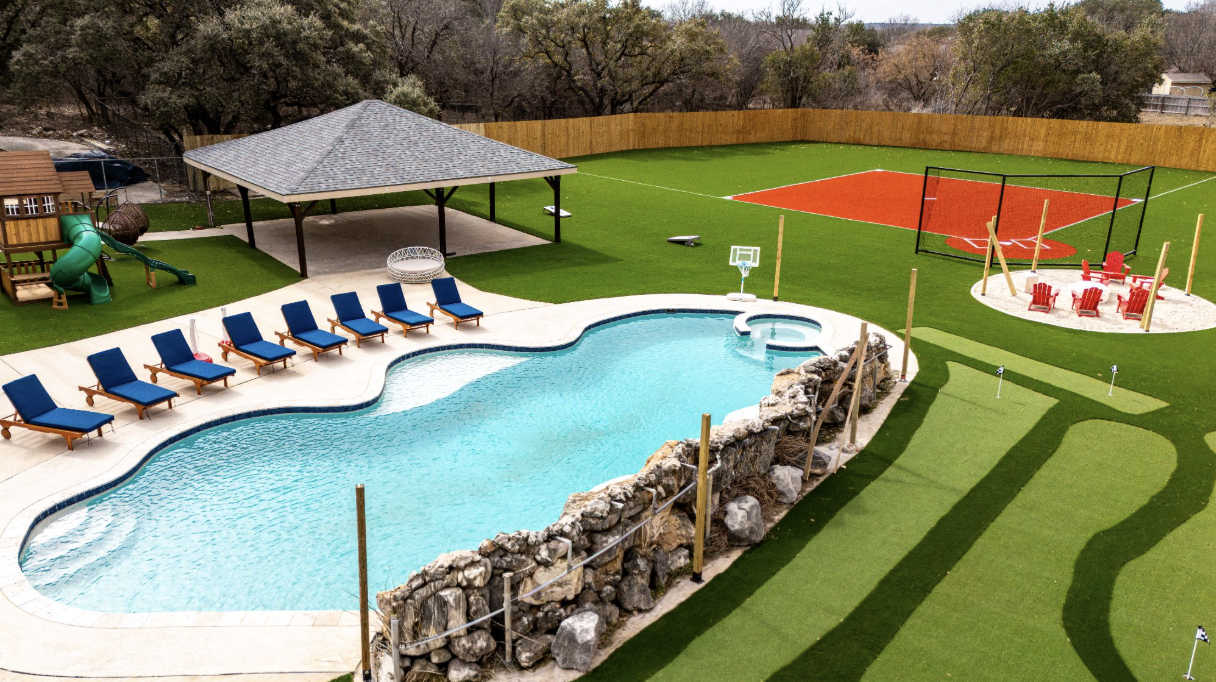
- Backyard play areas: This includes spaces with a swing set, climber, trampoline, or an open area where young children can play.
- Daycares and preschools: These spaces see frequent activity and benefit from a surface that is easier to clean than mud or loose material.
- Schools and community parks: Playground artificial turf can help maintain a consistent surface in areas where natural grass wears down quickly.
Larger sites, HOA common areas, and other busy spaces may need a more detailed installation plan. For those projects, an installer with commercial turf experience can recommend materials based on the size, traffic, drainage, and intended use of the area.
Frequently Asked Questions
Is artificial turf a good option for playgrounds?
It can be. Playground turf combines a consistent grass surface with optional cushioning beneath it. The right materials and installation approach depend on the equipment, property, and way the space will be used.
Does playground turf get too hot for kids?
It can become warmer than shaded natural grass when exposed to direct sunlight. Lighter fiber blends, cooling infill, shade, and a quick rinse before play can help make the surface more comfortable. Tell your installer if the area receives full sun for most of the day.
How long does playground turf last?
A professionally installed system can last for many years. Its lifespan depends on the materials, base preparation, amount of use, local conditions, and routine maintenance.
Can you put playground turf over an existing surface?
Grass and soil generally need preparation before turf is installed. A stable base helps the area drain, remain even, and hold up to regular use. Your installer can assess the existing surface and explain what preparation the site needs.
Is playground turf worth it compared to mulch?
Mulch costs less at the beginning, but it moves around and needs regular top-ups. Turf requires a larger upfront investment, but it stays in place and needs a different, often simpler, maintenance routine. The better choice depends on your budget, property, and how often the play area is used.
Get a Free Estimate
Every yard is different. The right playground turf setup depends on your space, drainage, equipment, sun exposure, and how the area will be used. The fastest way to understand your options is to talk to our team.
Get a free estimate, and a member of the Waterloo Turf team will discuss your project and walk you through the available options.
Ready to start? Request your free estimate today.
Back