Does Artificial Turf Drain? How Synthetic Grass Handles Heavy Rain In Boise
Does Artificial Turf Actually Drain?
If you’ve ever watched rain hit a synthetic lawn, you might wonder:
Does artificial turf really drain… or is it basically a giant plastic sheet?
Let’s clear that up right away.
High-quality artificial turf drains exceptionally well and in many cases, better than natural grass. The key isn’t just the turf blades. It’s the entire drainage system working together beneath the surface.
At Waterloo Turf Boise, our systems are engineered to handle 28+ inches of rain per hour meaning even heavy Texas downpours won’t turn your yard into a muddy swamp.
Let’s break down how it actually works.
Does Artificial Turf Drain Or Does Water Sit On Top?
Absolutely, turf drains.
The secret lies in the perforated backing of the turf. While the blades give you that lush, natural look, the backing contains thousands of small holes that allow water to pass through quickly.
Instead of pooling:
- Rain flows straight through the turf.
- It moves into the base layer below.
- It percolates into the soil naturally.
This busts one of the biggest myths in the industry: turf is not a plastic tarp. It’s engineered for real-world weather performance.
We’ve seen yards transform from muddy messes into fully usable spaces even immediately after heavy storms.
What Actually Makes Turf Drain?
While the perforated backing starts the drainage process, the real hero is what’s underneath.
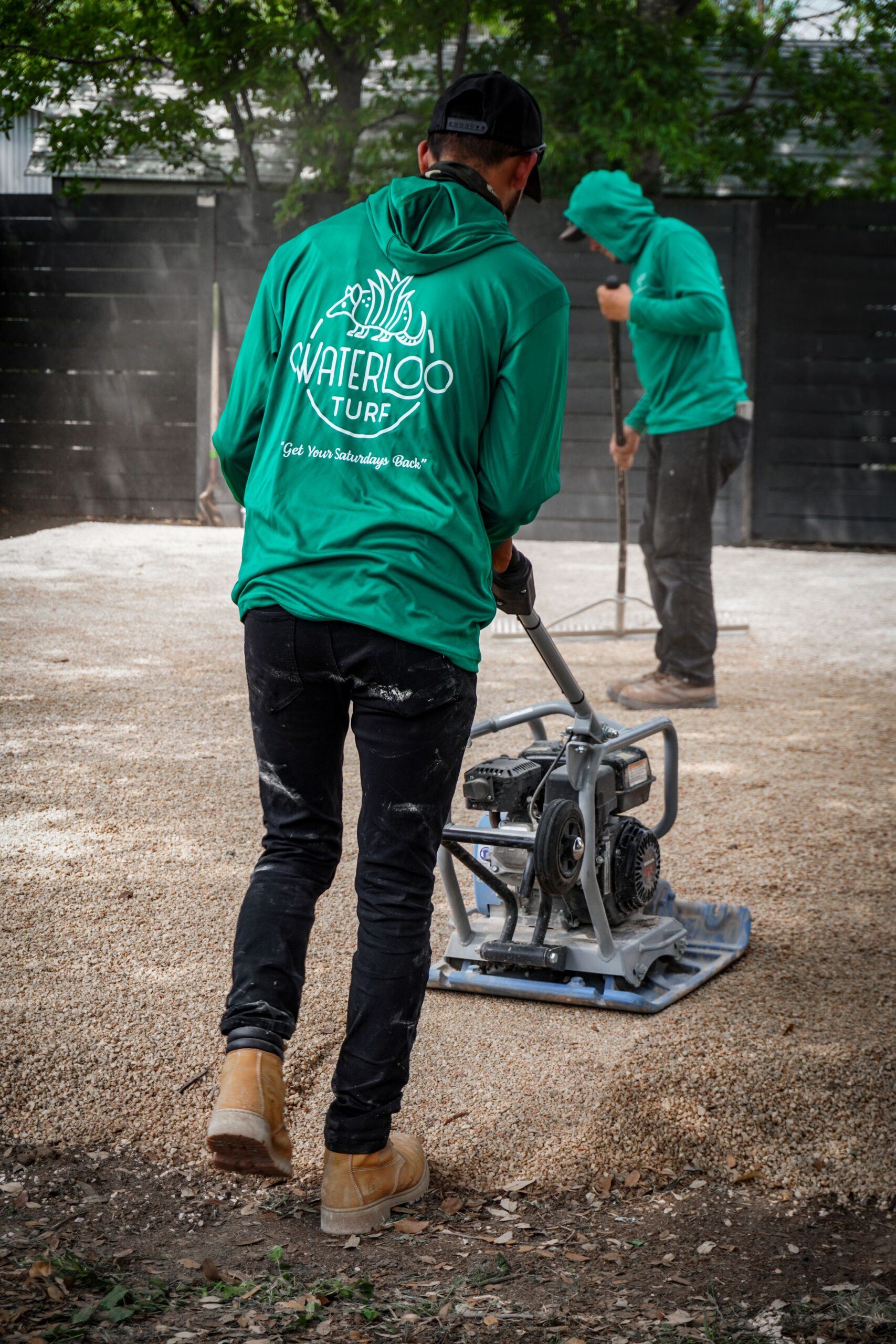
A properly prepared base layer is what determines whether your turf drains beautifully or becomes a problem.
Here’s what matters:
- Compacted decomposed granite or crushed stone
- Proper grading and slope
- Adequate depth (typically 3–4 inches or more)
This base creates channels that allow water to move efficiently into the soil below mimicking natural drainage.
Without proper base prep, even the best turf product can fail.
At Waterloo Turf Boise, we prioritize base preparation in every installation. It’s what turns potential headaches into hassle-free lawns.
What Layers Go Under Artificial Turf To Manage Water Properly?
A professional turf installation is like a layered drainage system where each component plays a role.
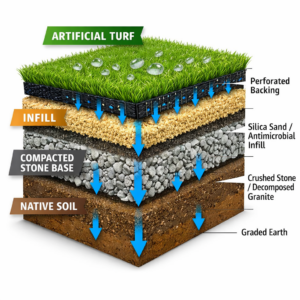
Here’s what a proper cross-section looks like:
- Excavated Native Soil: We remove 3–4 inches of existing soil to create space for the drainage system.
- Compacted Base Layer: Decomposed granite or crushed stone is added and compacted for stability and water flow.
- Weed Barrier Fabric: Prevents unwanted growth while still allowing water to pass through.
- Artificial Turf with Perforated Backing: Water flows through immediately.
- Infill (Typically Silica Sand): Adds weight and stability without blocking drainage.
Think of it like a natural filtration system built into your yard.
Why Is The Base The Most Important Part And The Part Homeowners Never See?
The base is the unsung hero.
It provides:
- Structural integrity
- Long-term stability
- Proper percolation
- Protection against settling and erosion
Homeowners never see it but they absolutely feel it.
A skimpy or improperly compacted base can lead to:
- Uneven surfaces
- Pooling water
- Odor issues
- Costly repairs
At Waterloo Turf Boise, we invest heavily in premium base prep because it’s what separates a “good enough” install from one that lasts 15+ years.
What If My Yard Already Has Pooling Or Drainage Problems?
Pre-existing drainage issues aren’t a deal-breaker but they must be addressed before installation.
Common issues include:
- Poor soil percolation
- Improper grading
- Low spots
- Water runoff from surrounding areas
Solutions may include:
- Regrading the yard
- Installing drainage channels
- Adding French drains
- Improving slope direction
Honesty matters. During our free estimates, we assess existing conditions and recommend fixes before installing turf. Proper problem-solving prevents long-term regrets.
How Does Artificial Turf Handle Heavy Rain And Storms?
Artificial turf performs extremely well in heavy weather.
Our systems are engineered to handle 28+ inches of rain per hour. Even intense storms won’t leave standing water.
Here’s why:
- Water passes instantly through perforations
- The compacted base directs water away
- There’s no mud or soil displacement
- The surface dries quickly
Unlike natural grass, which becomes saturated and sloppy, turf bounces back fast, often ready for use within minutes.
How Does Drainage Work For Pet Turf And Prevent Odors?
For pet owners, drainage isn’t just about rain it’s about sanitation.
Pet turf systems include:
- Enhanced perforations
- Antimicrobial infill
- Efficient liquid evacuation through the base
When urine drains quickly into the base and soil, odors don’t linger. Regular rinsing keeps everything fresh.
At Waterloo Turf Boise, we tailor installations for pet owners so your yard stays odor-free long term even with heavy use.
What Are The Most Common Drainage Mistakes In Bad Turf Installs?
We’ve seen the shortcuts and they always cause problems later.
Common mistakes include:
- Skimping on base depth
- Using native soil instead of crushed stone
- Ignoring grading and slope
- Skipping weed barriers
- Failing to address existing drainage problems
These shortcuts lead to:
- Pooling water
- Mold and odor
- Uneven surfaces
- Premature turf failure
Professional base preparation is what separates expert installs from cheap imitations.
Can Drainage Issues Be Fixed After Turf Is Installed?
Sometimes, but it’s disruptive and costly.
Fixes often require:
- Removing the turf
- Regrading the base
- Installing drainage systems
Prevention is always better.
That’s why we identify and solve potential issues before installation begins. Choosing the right installer from day one saves time, money, and frustration.
What Should Homeowners Ask An Installer About Drainage?
If you’re vetting turf installers, ask these questions:
- What base materials do you use?
- How deep is your base layer? (Look for 3+ inches of compacted granite.)
- How do you handle pre-existing drainage issues?
- What drainage rate can your system handle?
- Can I see a cross-section of your installation layers?
Transparent answers indicate expertise.
At Waterloo Turf Boise, we’re happy to walk homeowners through every layer and explain exactly how we build a drainage system that lasts.
The Bottom Line
Artificial turf absolutely drains when it’s installed correctly.
The turf backing allows water through.
The base moves it efficiently into the soil.
Proper grading ensures it never pools.
The difference between a flawless lawn and a drainage nightmare?
It’s what’s underneath.
Ready To Install Turf That Stays Dry?
Contact Waterloo Turf Boise, today for a free estimate and let’s build a yard that performs beautifully in every season, rain or shine. https://waterlooturf.com/Boise/freeestimate/
Back