Why Three Artificial Grass Quotes for the Same Port Charlotte Yard Can Differ So Much
The Scenario: Same Yard, Three Very Different Numbers
You measure the backyard, send the dimensions to three installers, and get three numbers back that don’t resemble each other. One quote comes in noticeably lower. It’s tempting to assume the cheaper bid found a more efficient way to do the same job. In Port Charlotte, where sandy soil, seasonal rain, and HOA landscaping rules all factor into how turf performs, that assumption is usually wrong. The gap is almost never about the grass. It’s about what each contractor is planning to do (or skip) before the grass ever gets rolled out.
What’s Buried in the Price: Base Depth and Compaction
Artificial turf installed straight onto existing dirt or old sod will eventually wrinkle, pool water, and shift underfoot. We don’t do that at Waterloo Turf, and it’s the first thing worth asking any contractor you’re comparing: are they excavating the area and building a compacted base of crushed stone or decomposed granite underneath, or are they laying turf over what’s already there?
That excavation and compaction step is labor- and material-intensive, and it’s also the part of the job most likely to get quietly shortened on a lower bid. A quote that skips several inches of base depth will look cheaper on paper and cost more in drainage problems within a Florida wet season or two. If a bid looks low, ask specifically how deep the base goes and what material it’s made from before assuming you found a better deal.
Material Specs That Change the Per-Square-Foot Math
Turf itself isn’t a single product, face weight, pile height, backing type, and UV stabilization all vary, and they all affect price. Lower-grade turf fades faster in direct Southwest Florida sun and can feel noticeably different underfoot within a couple of seasons. We install non-toxic, lead-free, UV-stabilized turf built to hold up in hot climates for 12 to 20 years, and that spec should be printed on any quote you’re evaluating, not just implied.
It’s also worth being clear-eyed about maintenance expectations regardless of which installer you choose: artificial turf is low maintenance, not zero maintenance. Even well-installed turf needs occasional rinsing and light brushing, particularly in homes with pets. If a quote implies you’ll never touch the lawn again, that’s a claim to question rather than a selling point to trust.
Irrigation Lines and Drainage Planning Around Pools and Pavers
Most Port Charlotte yards getting turf still have an active irrigation system running through the area. If that system isn’t capped off properly, you’re left paying to water grass that no longer exists, and you risk water pooling under the turf where a line was left open. Our installation process includes capping existing irrigation lines in the turf footprint specifically to stop that ongoing cost.
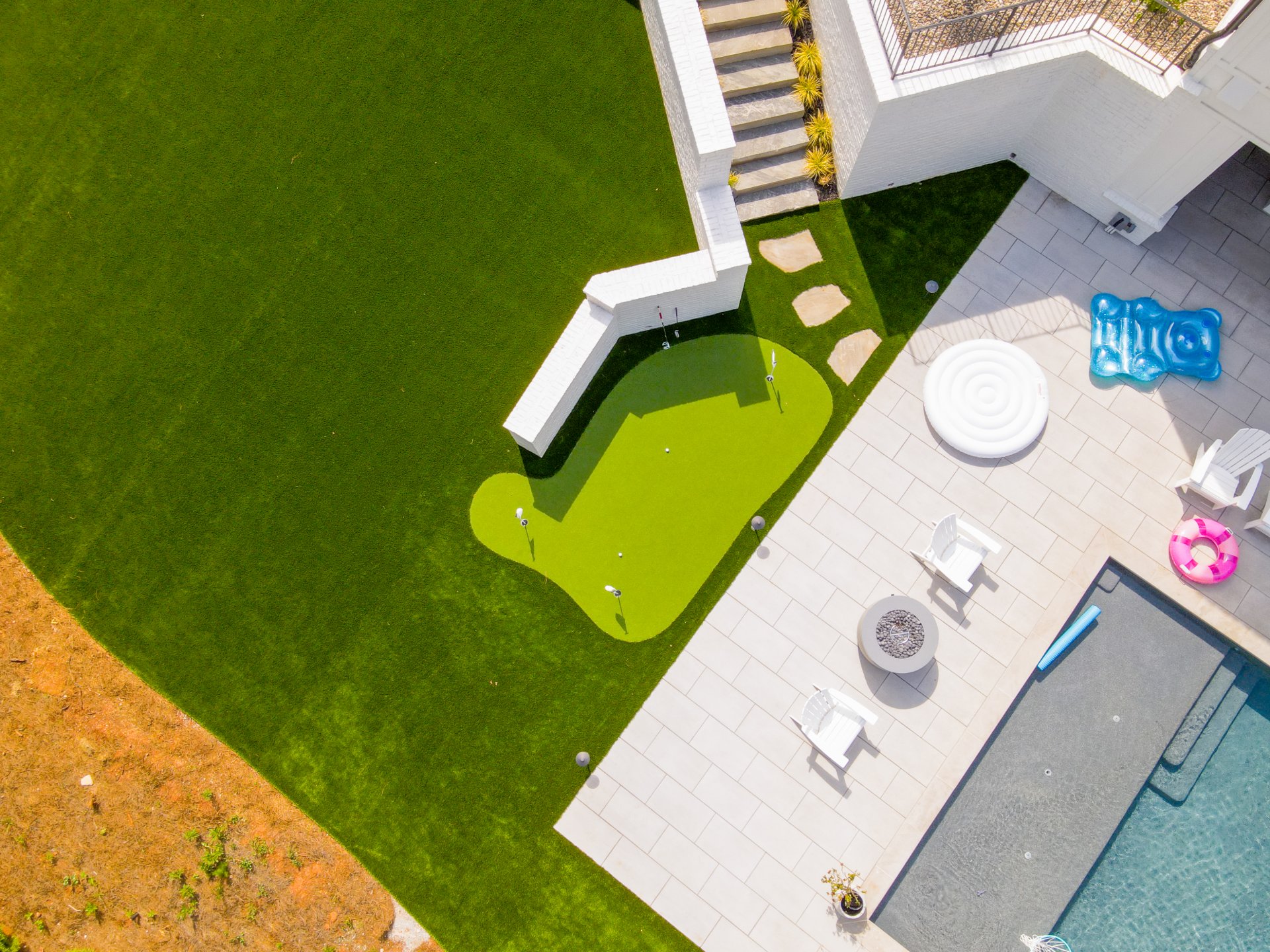
Drainage planning doesn’t stop at irrigation. Yards with pool decking, pavers, or low-e window glass nearby need the base and perimeter work mapped around those features, since reflected heat and hardscape runoff both affect how turf drains and ages over time. A quote that treats the yard as one flat rectangle, without accounting for what’s already built into it, is missing a step that shows up later as standing water or heat damage near reflective surfaces.
HOA Paperwork Nobody Mentions Until It’s a Problem
Many Port Charlotte communities require HOA sign-off before artificial turf goes in, and the documentation requirements vary by neighborhood. A contractor familiar with local HOA expectations should be able to tell you, before installation, what kind of product specs or photos your association typically wants to see. If a quote doesn’t mention HOA approval at all, that’s worth raising directly rather than assuming it will sort itself out after the crew shows up.
What a Thorough Quote Spells Out Line by Line
Before signing anything, a written quote should itemize: base excavation depth and material, turf face weight and backing type, infill type if used, perimeter and seam installation method, irrigation capping, and any drainage or grading work tied to pools, pavers, or structures on the property. If a number on a page doesn’t correspond to a specific scope item, it’s reasonable to ask what that line actually includes.
Price differences that can’t be explained by any of the above are the ones worth slowing down for. A lower number built on a shallower base, thinner turf, or unaddressed irrigation lines isn’t a better deal, it’s a different, lesser job wearing the same label.
FAQs
Does a lower quote always mean thinner base prep? Not always, but it’s the first thing to check. Ask how many inches of crushed stone or decomposed granite base the quote includes and how the soil underneath is being compacted before you compare it to a higher bid.
Will a contractor cap off my irrigation system, or just leave it buried under the turf? This should be stated explicitly in the quote. Leaving irrigation lines active under turf can lead to pooling and wasted water, so ask the installer to confirm the lines will be capped off within the turf area.
How do I know if a quote accounts for my HOA’s requirements? Ask directly whether the installer has worked with your specific community’s HOA before and whether they can provide the product specifications or documentation your association typically asks for ahead of time.
If you’re holding quotes that don’t line up and want a second set of eyes on what’s actually being proposed, Waterloo Turf Port Charlotte can walk your yard, assess the base conditions, existing irrigation, and any pool or paver drainage concerns, and give you an itemized comparison point before you commit.
Request a yard assessment from Waterloo Turf Port Charlotte to get an itemized quote you can compare line by line against the bids you already have.
Back