The Real Reason Some Pet Turf Installations Smell, and Others Don’t
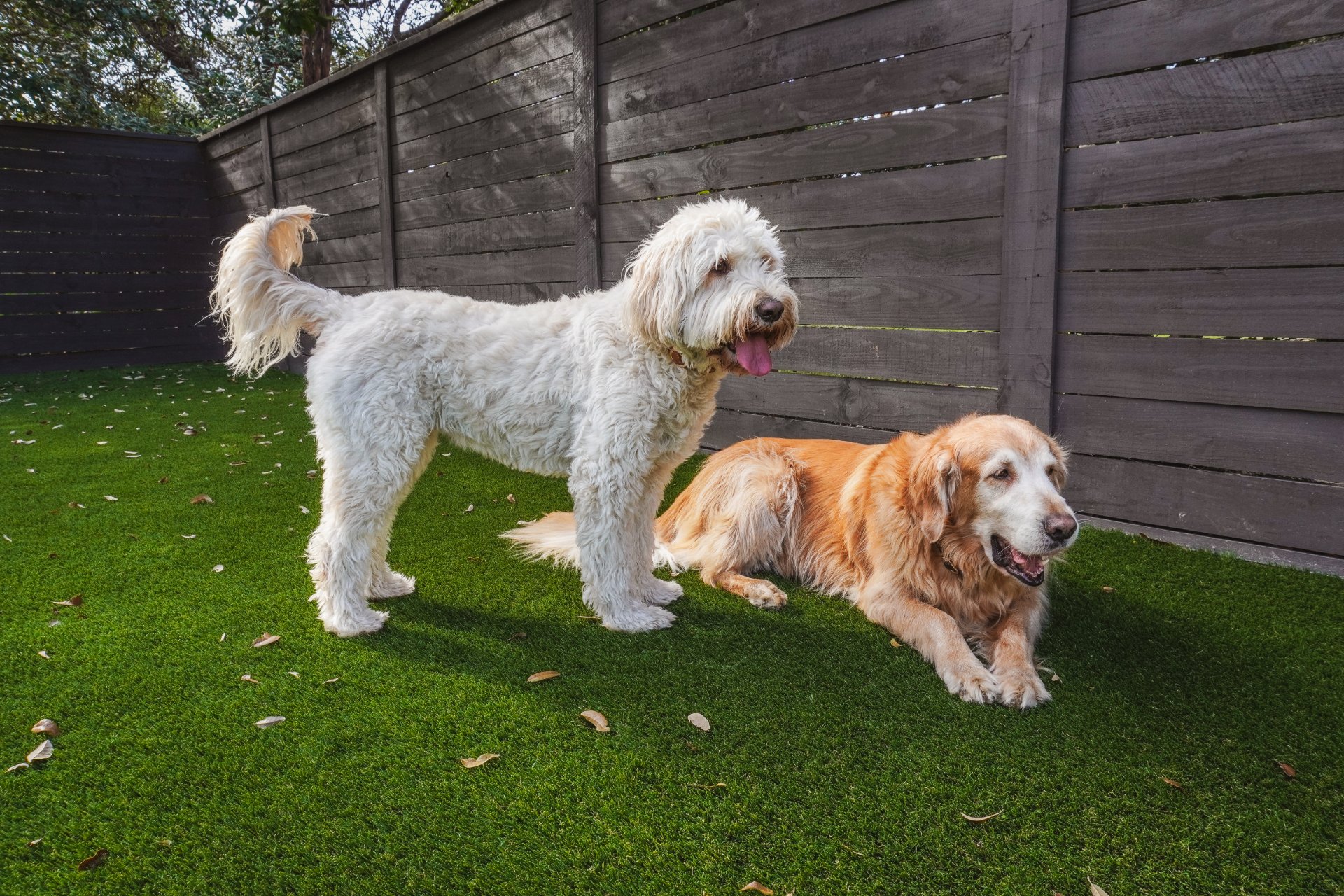
A common complaint from dog owners: they installed artificial turf for their dogs, and by July the backyard smells like a kennel. Online, the replies usually split into two camps. One group blames the turf product. The other asks a more useful question first: what’s underneath it?
That second question matters more than most people expect. Odor control in a pet area isn’t really a turf problem. It’s a system problem that starts several inches below the surface, long before anyone unrolls a single piece of grass.
The Base Decides Whether Urine Drains or Sits
Artificial grass has permeable backing with drainage holes, but those holes only work if what’s beneath them can actually accept and move water. Compacted native Indiana clay does not drain well on its own, which is why Waterloo Turf excavates the existing soil and builds a base of crushed stone or decomposed granite before any turf goes down. This base is designed to mimic the percolation of natural soil, letting liquid move through and away instead of pooling against the backing where bacteria and odor develop.
This is also why turf installed directly onto bare dirt tends to disappoint pet owners within a season. Without an engineered base, urine has nowhere to go. It sits at the root of the fibers, the compacted ground stays saturated after rain, and the yard develops wrinkles as the soil shifts underneath. A correctly built base addresses both problems at once: drainage and long-term surface stability.
What the Backing Can and Can’t Do by Itself
Permeable backing is the second layer of the system, not the whole solution. It’s effective at letting liquid pass through on its way to the base, but it isn’t a filter and it isn’t an odor eliminator. For a single dog on a reasonably sized lawn, backing plus a properly built base is often enough to keep odor manageable with routine rinsing. For two, three, or more dogs concentrating waste in the same corner of the yard, the volume of urine moving through that spot multiplies, and the backing and base need backup from a maintenance routine, not a product upgrade.
Rinsing Is Maintenance, Not an Afterthought
Artificial grass is low maintenance, not zero maintenance, and pet areas are where that distinction matters most. A periodic hose-down flushes residue through the base rather than letting it concentrate in one spot, and light brushing keeps the fibers upright so urine doesn’t get trapped low in the pile where it’s harder to rinse clean. Skipping this step is the most common reason a well-installed system still develops odor over time. The base and backing move liquid efficiently; they don’t replace the need to occasionally flush the system the way nature would with rainfall on a real lawn.
Single-Dog and Multi-Dog Households Aren’t the Same Project
A one-dog household and a four-dog household are not solving the same odor equation, even on identical turf. More dogs mean more concentrated nitrogen in the same square footage, which is why enzyme treatments become part of the conversation for larger pet households. Enzymes break down the organic compounds in urine that cause odor, supplementing what rinsing and drainage handle on their own. Households with one dog may rarely need this step. Households with several dogs using the same corner of yard typically need it on a more regular basis, simply because the waste load is higher in a fixed area.
Protecting What’s Already in the Yard
Before installation, the yard gets assessed for more than just turf placement. Existing irrigation lines in the turf footprint get capped off, since they’re no longer needed and leaving them active under turf creates unnecessary water costs and potential drainage conflicts. Drainage planning also accounts for existing hardscaping, pool decking, and the slope of the yard, so runoff is directed away from these features rather than toward them. In homes with HOA requirements, these same drainage and base details are often what distinguish an installation likely to pass review from one that creates maintenance disputes later.
Heat, Fading, and the Realistic Lifespan Question
Indianapolis summers bring stretches of high heat and strong sun exposure, and UV-stabilized materials are what keep fibers from fading or breaking down prematurely under those conditions. Non-toxic, lead-free turf built for this kind of exposure is built to hold up to that exposure, which is a meaningfully different expectation than lower-grade products not built for sustained UV and heat exposure.
A Few Direct Answers
Does artificial grass get rid of dog urine smell, or does it just cover it up? A properly built base and drainage system removes the liquid itself rather than masking odor. Rinsing and, where needed, enzyme treatment address the organic residue that causes smell at its source.
Can turf be installed over an existing sprinkler system? The irrigation lines in the turf area get capped off during installation rather than left active, since the base and drainage system replace the need for that irrigation entirely.
How often do multi-dog households need enzyme treatment compared to single-dog homes? It depends on dog count and how concentrated the use area is, but households with several dogs sharing one section of yard generally need enzyme treatment more frequently than a single-dog household using the same space.
If you’re weighing turf for a yard with more than one dog, the base and drainage plan matters as much as the product itself. A site visit can confirm what your specific yard, pool decking, and existing irrigation setup actually require before any decisions get made.
Schedule an on-site drainage and base assessment through the Pet Turf page to see what your Indianapolis or Brownsburg yard specifically needs before installation begins.
Back